La Marzocco
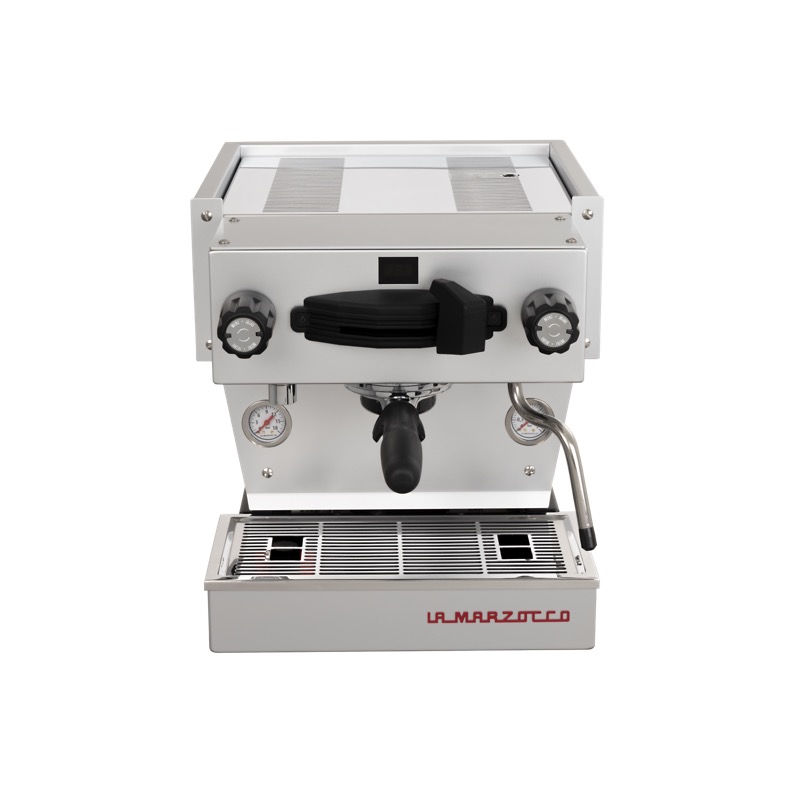
La Marzocco Linea Mini
A scaled-down version of the legendary commercial Linea Classic. Professional-grade espresso at home with dual boilers and saturated group head. The current version sells as the Linea Mini R with app connectivity and adjustable pump pressure.
Price and availability on La Marzocco's site may differ.
Specifications
Features
Pros
- ✓Commercial-grade quality at home
- ✓Legendary thermal stability
- ✓Beautiful Italian design
- ✓Plumbable option
Cons
- ✗Extremely expensive
- ✗Very heavy
- ✗No built-in grinder
- ✗Overkill for casual drinkers
What the Community Says(1,418 discussions)
The Linea Mini is the home version of a machine that has served commercial bars for decades, and much of what people buy is exactly that lineage: a saturated group, serious thermal stability under repeated use, and a badge that carries genuine weight and genuine resale value. It is frequently a milestone purchase rather than a rational one — a gift, a reward, a dream machine — and owners describe it in those terms without embarrassment. Where it earns its keep functionally is sustained performance: it steams quickly and holds temperature through drink after drink in a way domestic-scale machines do not, which is the real argument for a commercial-derived design in a home.
The community's honesty about value is the striking thing in these discussions, and it comes overwhelmingly from owners rather than outsiders. An owner of the Mini's flow-control version says plainly that he bought it because his wife found an ECM Synchronika too industrial-looking for daily use, and that he would have been perfectly content with the ECM — adding that the coffee is not better and the machine is not twice as good despite costing twice as much. That framing recurs constantly: the Linea Mini is bought for the object, the endurance and the resale, not because it produces a superior cup to well-built machines at half the price. The other dominant theme is app control, and the feeling is strong. Recent changes that reduce app dependency were greeted with relief and the widely shared sentiment that machines should have buttons and knobs, with owners pointing out that apps get shut down and a machine should not lose functionality when software support ends. If you are buying at this level, how a machine is controlled is worth weighing as seriously as how it brews. One more note from owners: the Mini draws considerably more power than smaller machines because of its large boiler, which matters where electricity is expensive.
At $6,600 new, the most interesting part of the Linea Mini market is the used one. Well-kept machines from a few years back change hands for a fraction of new pricing — owners consider around $1,600 a fair price for a 2021 machine in good condition — and because these are built to commercial standards and widely serviced, buying used is a genuinely sensible route rather than a risk. Against an ECM Synchronika, owners report the La Marzocco steams a little faster and takes less space, while the ECM is expected to last fifteen to twenty years and costs far less. Against a Lelit Bianca, you trade flow control for the saturated group and greater thermal endurance. And the sentiment worth reporting honestly is that within enthusiast circles the Mini no longer sits unchallenged at the top — a view expressed bluntly by some owners now that machines with flow control and modern temperature management are available for much less. Buy it for the build, the endurance and the object; do not expect the cup alone to justify the gap.
Common Questions about the La Marzocco Linea Mini
Compare the La Marzocco Linea Mini
Related machines
La Marzocco
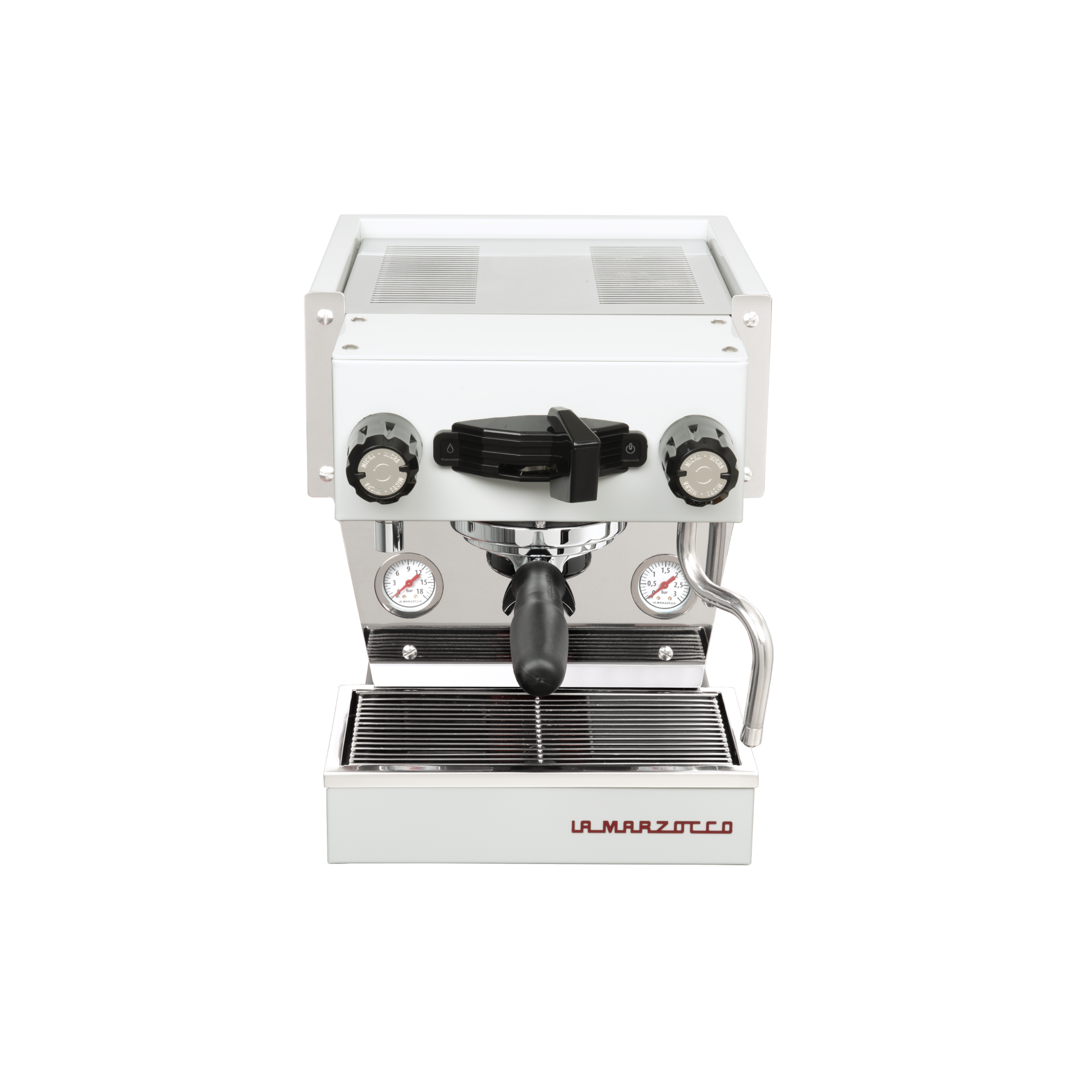
La Marzocco Linea Micra
La Marzocco's compact dual boiler distills the Linea Mini experience into a smaller package designed for home counters. Same commercial-grade build, app-controlled, with proper saturated group head.
Rocket Espresso
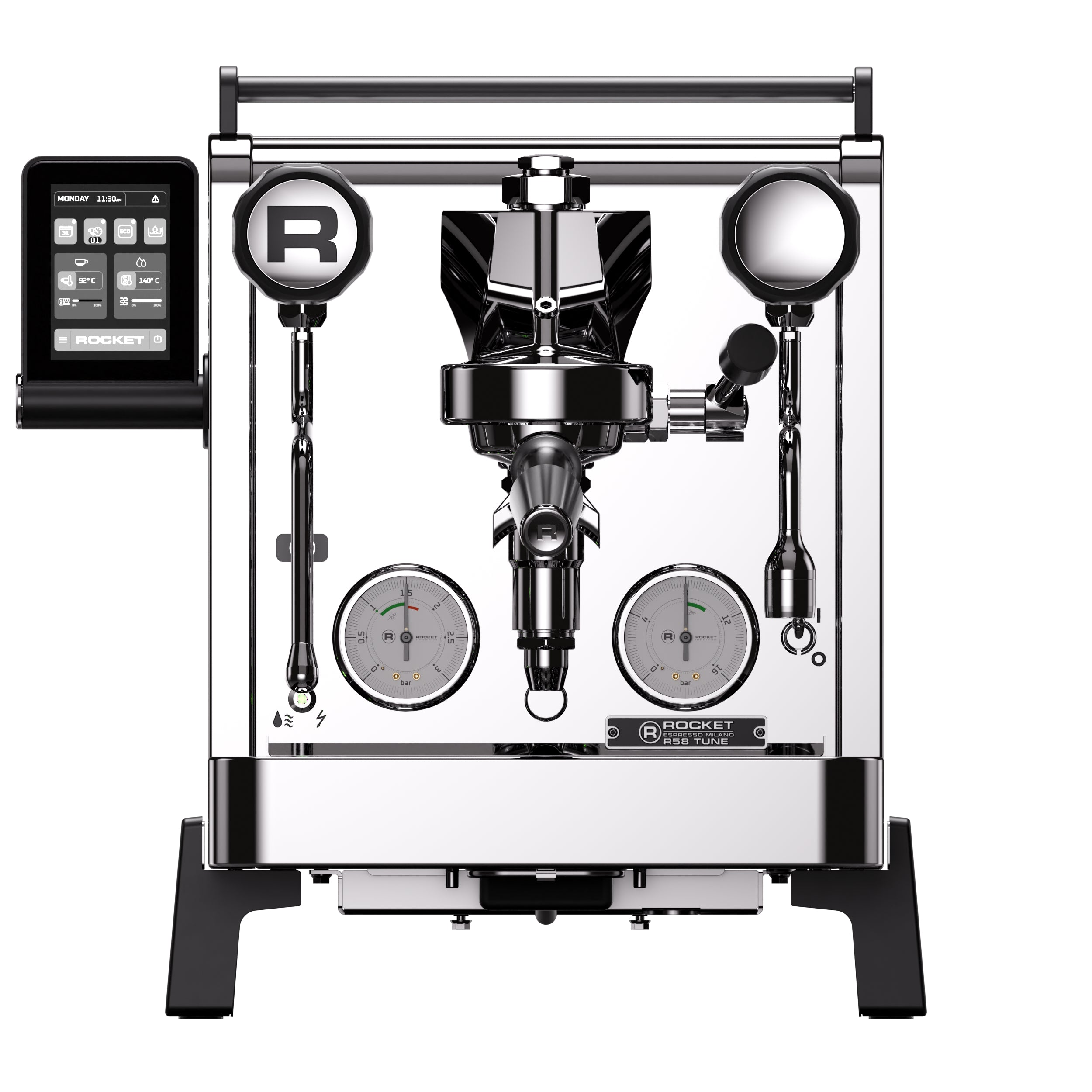
Rocket R58 TUNE
The latest evolution of Rocket's flagship dual boiler, succeeding the R58 Cinquantotto. TUNE technology builds a fixed 3-bar pre-infusion and end-of-shot pressure ramp-down into programmable three-stage profiles to fight channeling and overextraction, while a magnetic touchscreen Communication Pod on the top left sets both PID-controlled boilers. A heated fast-warming E61 group has it ready in about 15 minutes, and the self-priming rotary pump runs from the tank or plumbed in.
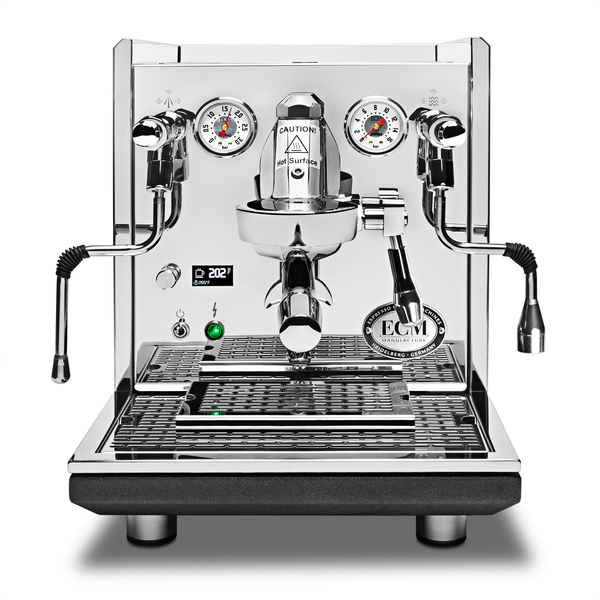
The frequently-cited "endgame" prosumer dual boiler. Hand-built in Germany with stainless steel construction, dual PIDs, and an optional flow control device for advanced extraction profiling. The current version is the Synchronika II, with a much faster ~6.5-minute warm-up. Now sold as the Synchronika II (same price) with an OLED PID display, faster-heating E61 group, and auto on/off scheduling.
Decent
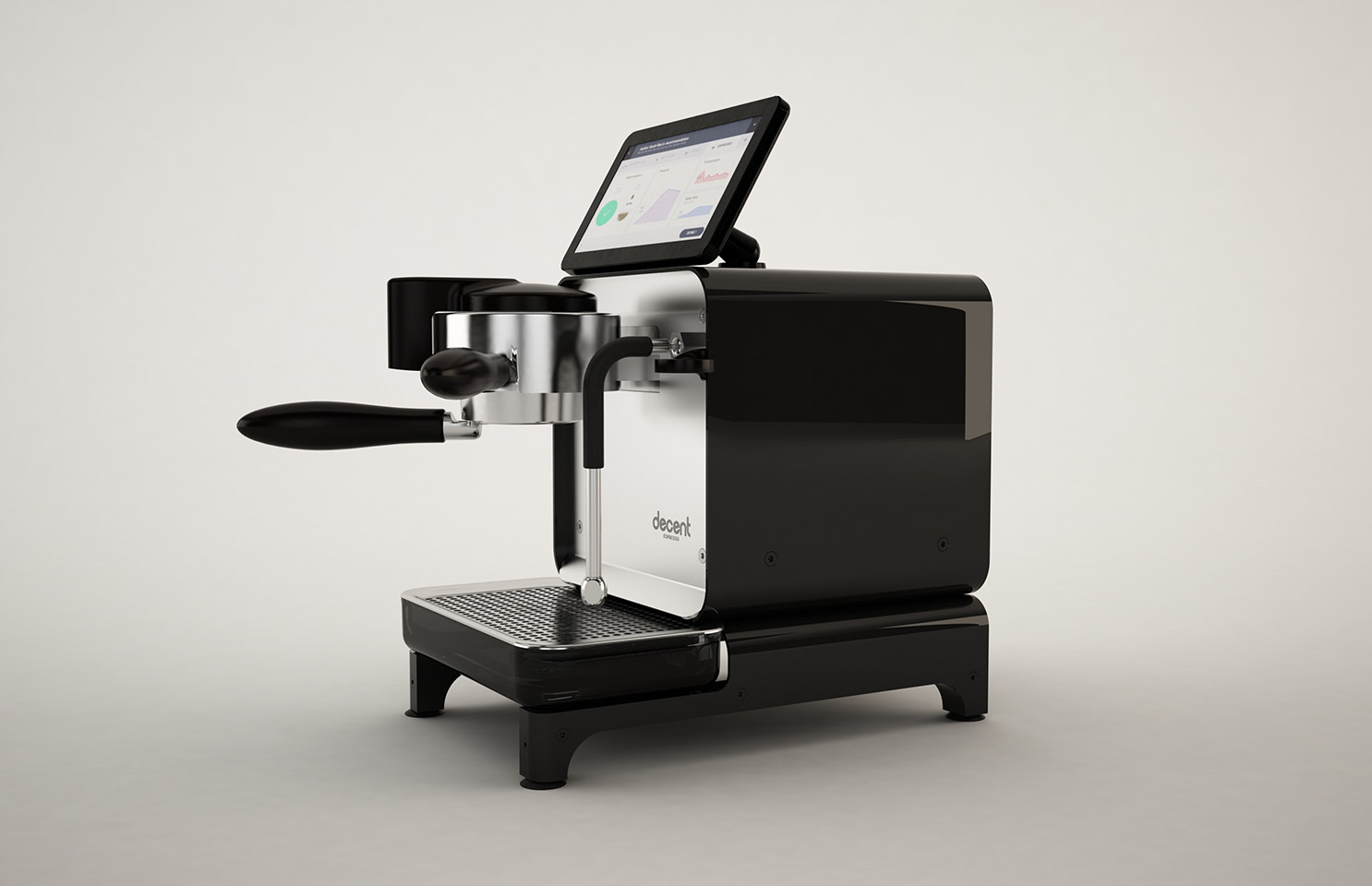
Decent DE1PRO
The most programmable espresso machine ever sold: a tablet graphs pressure, flow, and temperature in real time while you design custom shot profiles or replay recipes from world champions. Commercially certified, rated for 200,000 shots, and plumbable for cafe or cart use.
Rocket Espresso
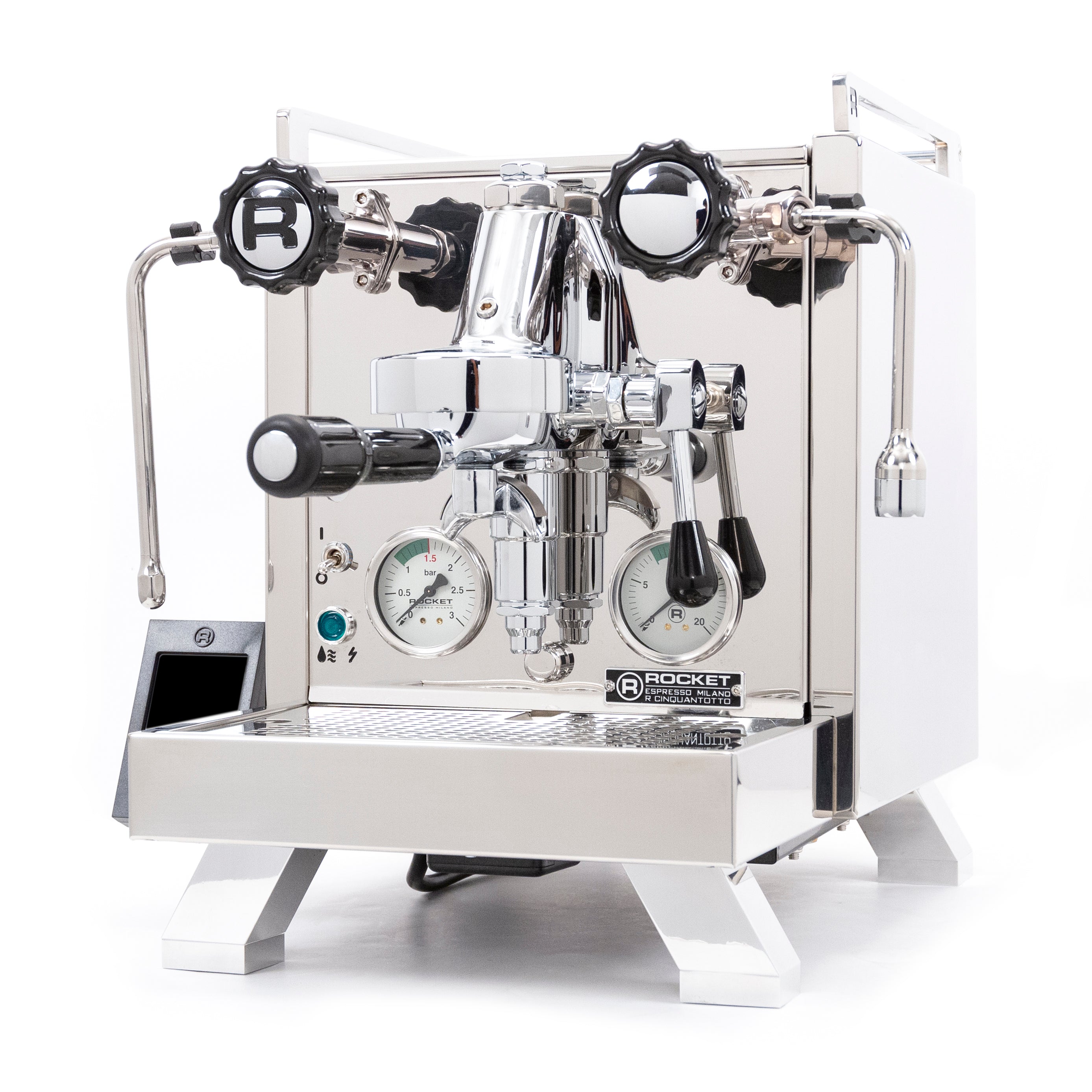
Rocket R58
Rocket's flagship dual boiler with rotary pump, plumb-in capability, and Italian craftsmanship. Polished stainless body, dual PID, and the E61 group head that defines prosumer espresso. The current version sells as the R58 Cinquantotto with a detachable touchscreen PID controller.
Lelit
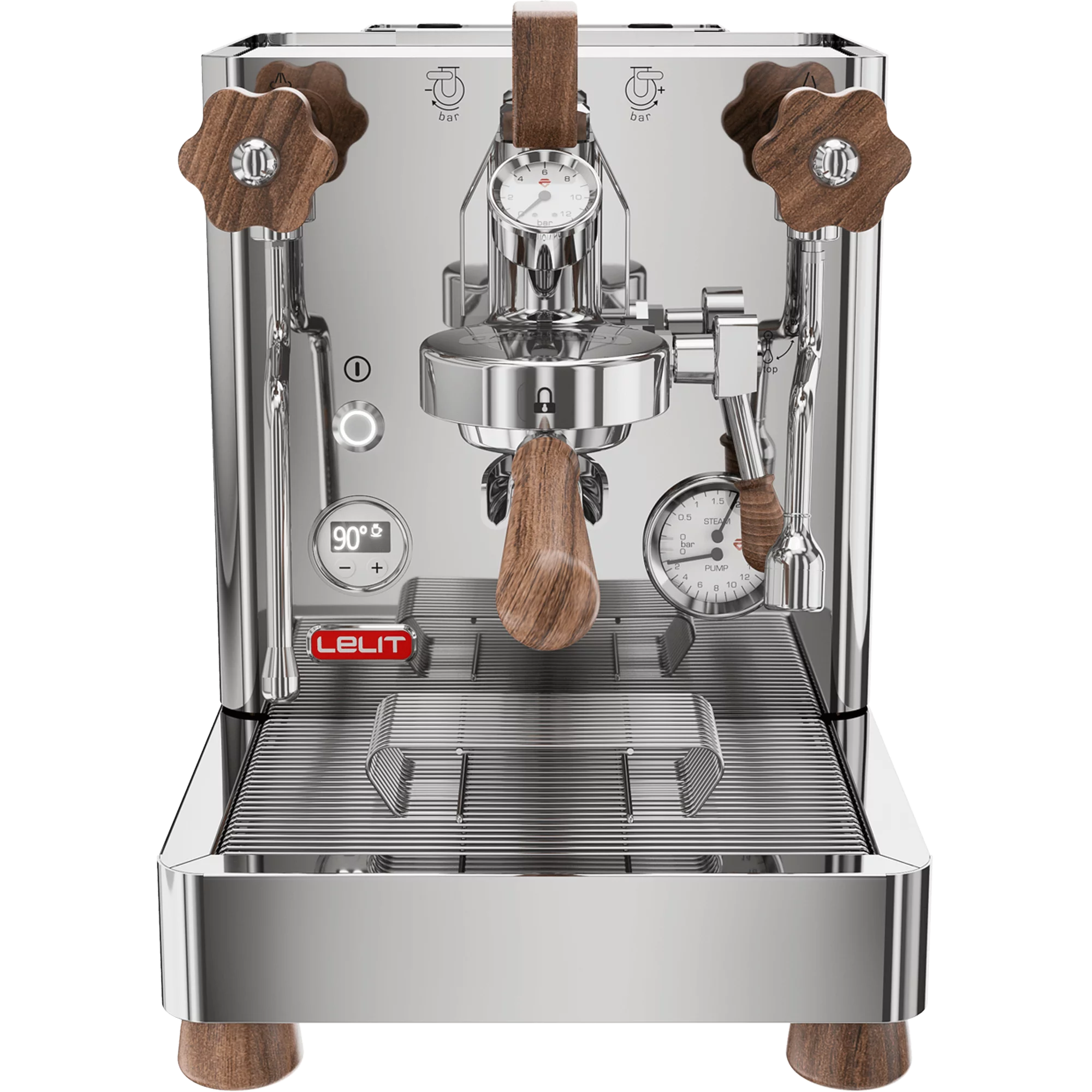
Lelit Bianca V3
The machine that popularized flow control for home espresso. Dual boiler with E61 group head and a paddle that lets you manually control flow rate during extraction for pressure profiling.