Philips 2300 LatteGo vs Philips Baristina
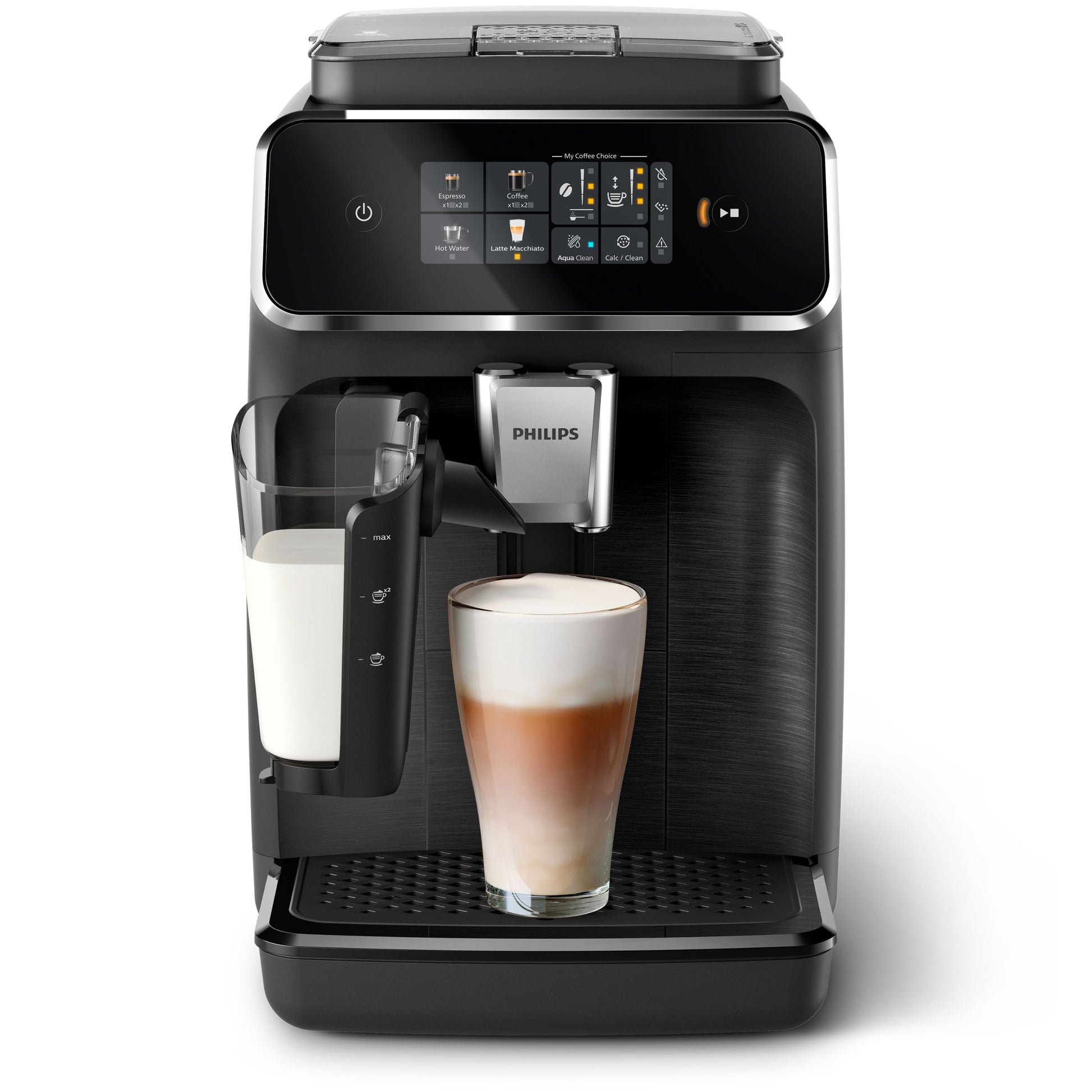
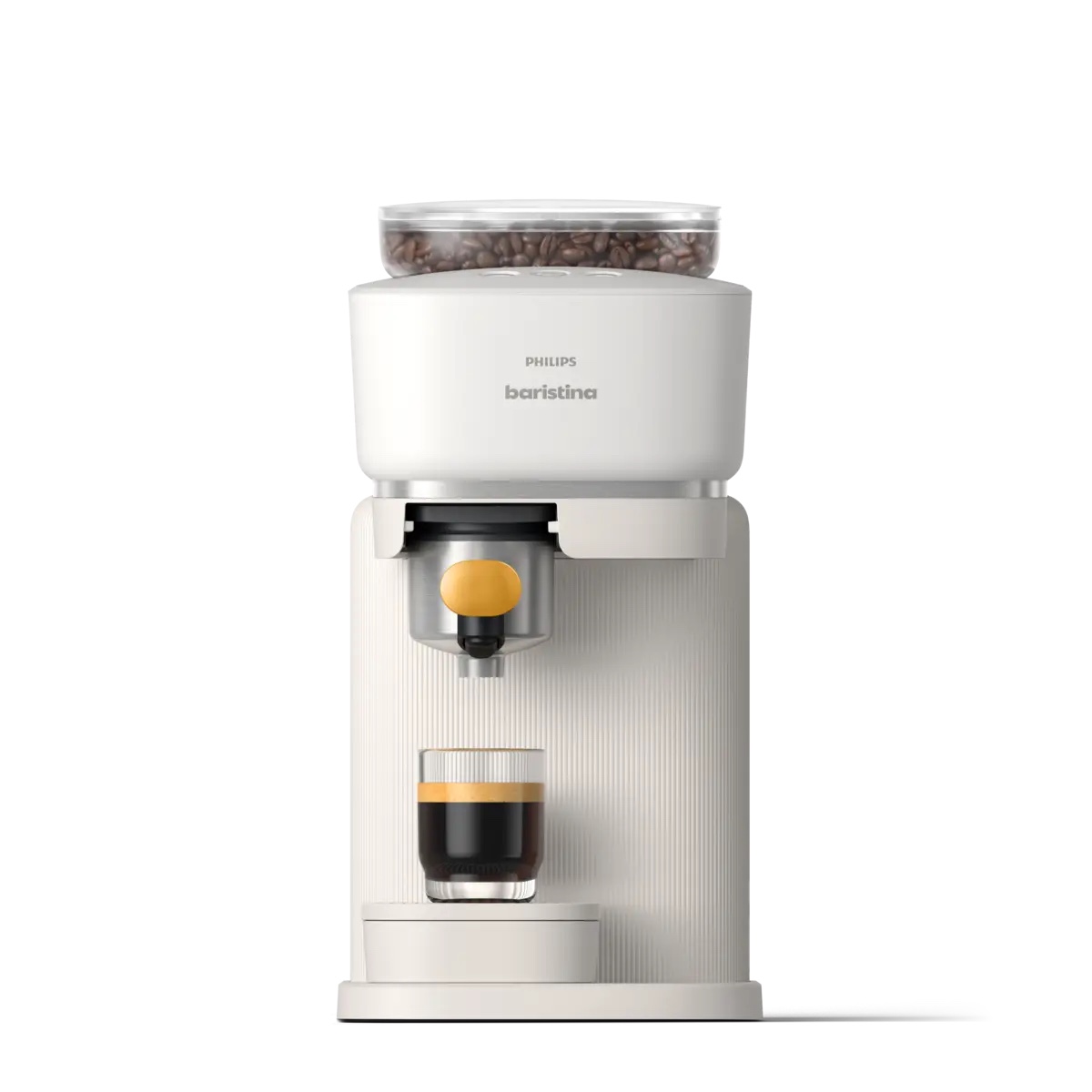
Quick take: The Philips Baristina costs $183 less; the Philips Baristina heats up faster (30 seconds).
| Spec | Philips 2300 LatteGo | Philips Baristina |
|---|---|---|
| Standout features | LatteGo Milk System, SilentBrew, One-Touch, AquaClean Filter, 12 Grind Settings | Tilt-to-Brew One Swipe, Auto Dose and Tamp, Intensity Boost Button, 16-Bar Pump, Recycled-Plastic Build |
| Approx. price | ~$430 | ~$247 |
| Type | Super-Automatic | Semi-Automatic |
| Boiler | Thermoblock | Thermoblock |
| Built-in grinder | Yes | Yes |
| Pump pressure | 15 bar | 16 bar |
| Water capacity | 60 oz | 40 oz |
| Warm-up time | 45 seconds | 30 seconds |
| Steam wand | Auto (LatteGo) | — |
| Basket type | — | Pressurized Only |
| Best for | Beginners | Beginners |
| Dimensions | 9 x 17 x 14 in | 7.1 x 14.9 x 13.5 in |
| Weight | 17.6 lbs | 14 lbs |
| Warranty | 2 years | 2 years |
Pros & cons
Philips 2300 LatteGo
- ✓LatteGo milk system has no tubes and cleans in seconds
- ✓SilentBrew makes it one of the quietest superautos under $700
- ✓AquaClean filter defers descaling for up to 5,000 cups
- ✓Same ceramic 12-setting grinder as pricier Philips models
- ✗Only 4 drink presets (espresso, coffee, cappuccino, hot water) - no latte macchiato or iced drinks
- ✗Basic display versus the 3300's touchscreen
- ✗No user profiles or drink memory
- ✗Milk froth is convenience-grade, not barista-quality
Philips Baristina
- ✓Easiest real-bean espresso workflow on the market - one physical swipe
- ✓No grind, dose, or tamp decisions for total beginners
- ✓Tiny footprint and clean Scandinavian-style design
- ✓Puck pops out of the portafilter with a button press
- ✗No steam wand - milk drinks need the Latte version or a separate frother
- ✗Grind size is not adjustable, limiting extraction tuning
- ✗Espresso-only intensity presets, no manual shot control
- ✗Proprietary portafilter rules out standard accessories
What owners say
Philips Baristina
The Baristina is Philips' attempt to make bean-to-cup coffee approachable and attractive at $247, and it succeeds at exactly what it sets out to do. It is compact, genuinely sleek, and extremely simple to operate — it grinds, doses, tamps and brews at one press, with a portafilter-style presentation that makes it look more like a traditional machine than it behaves. Buyers drawn to it are typically people who found real espresso machines intimidating or fiddly and want something that looks good on a counter and requires almost no learning. There is a small milk accessory concept alongside it, with a pouring aid and matching spoon for handling foam, which fits the machine's overall character: approachable rather than ambitious. Full owner insights →
Philips 2300 LatteGo vs Philips Baristina: common questions
Which is cheaper, the Philips 2300 LatteGo or the Philips Baristina?
The Philips Baristina is the cheaper of the two at roughly $247, about $183 less than the Philips 2300 LatteGo at ~$430. Both figures are approximate list prices and street prices move with sales.
Is the Philips 2300 LatteGo or the Philips Baristina easier to use day to day?
They are different classes of machine: the Philips 2300 LatteGo is a super-automatic that grinds, doses and brews at the touch of a button, while the Philips Baristina is a semi-automatic you dose, tamp and time yourself. That difference matters more than any single spec on this page — it decides how much of the shot you control and how much the machine handles for you.
Which is better for lattes and cappuccinos, the Philips 2300 LatteGo or the Philips Baristina?
The Philips 2300 LatteGo steams and textures milk automatically, while the Philips Baristina has no steam wand, so it makes espresso only. An automatic system gets you a consistent milk drink with no practice; a manual wand takes a few weeks to learn but gives you proper microfoam and latte art once it clicks.
Which heats up faster, the Philips 2300 LatteGo or the Philips Baristina?
The Philips Baristina is ready sooner — 30 seconds against 45 seconds for the Philips 2300 LatteGo. That gap matters most on weekday mornings; if you pull shots at a relaxed pace it makes little practical difference.