Lelit Bianca V3 vs Lelit Mara X
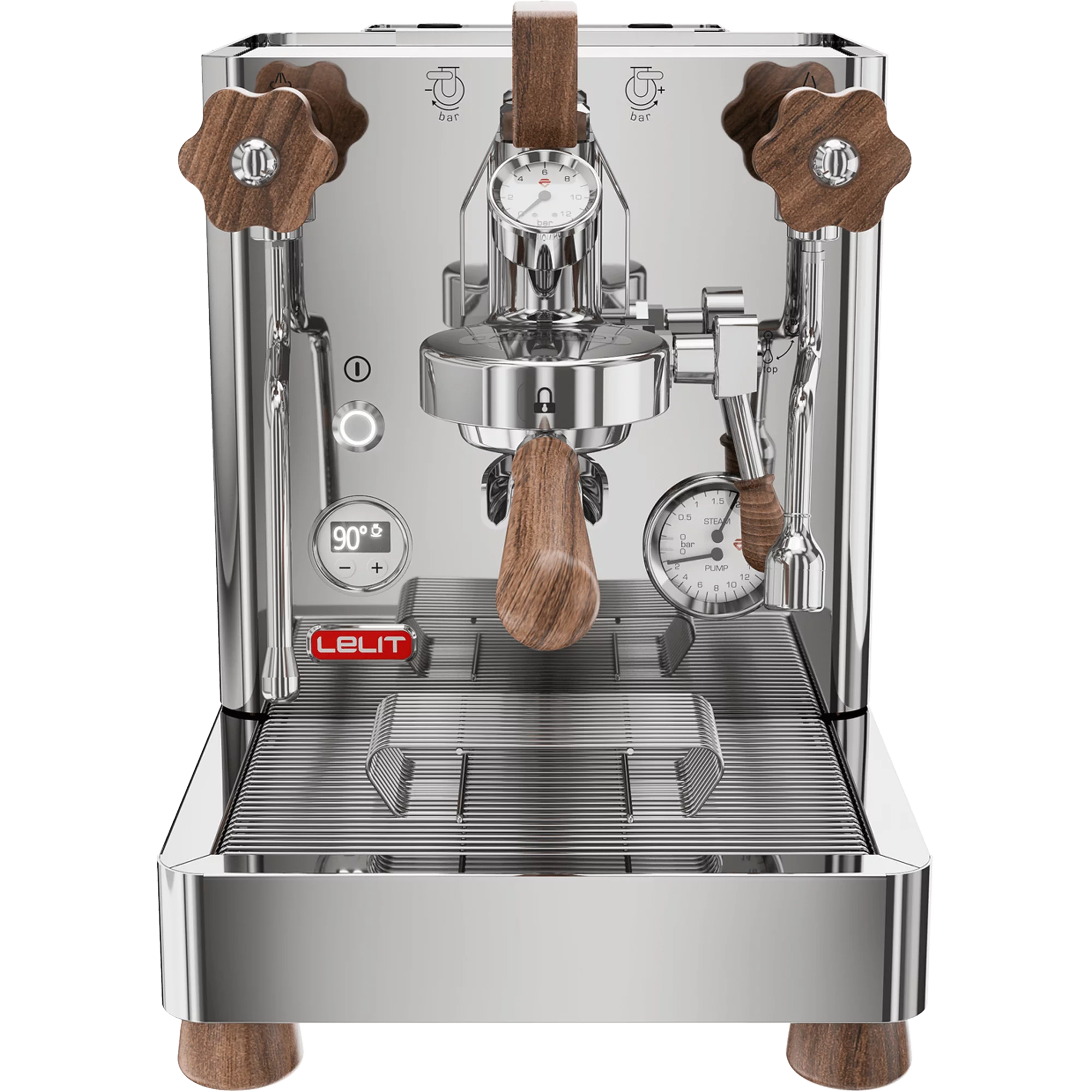

Quick take: The Lelit Mara X costs $1,300 less; the Lelit Mara X heats up faster (15 minutes).
| Spec | Lelit Bianca V3 | Lelit Mara X |
|---|---|---|
| Standout features | Dual Boiler, Flow Control Paddle, PID Control, Pre-Infusion, Pressure Profiling | Heat Exchanger, Brew Priority Mode, 3-Position Temperature Switch, Steam Wand |
| Approx. price | ~$3,000 | ~$1,700 |
| Type | Semi-Automatic | Semi-Automatic |
| Boiler | Dual Boiler | Heat Exchanger |
| Built-in grinder | No | No |
| Pump pressure | 9 bar | 9 bar |
| Water capacity | Plumbable + 84 oz tank | 84 oz |
| Warm-up time | 20 minutes | 15 minutes |
| Steam wand | Commercial Manual | Commercial Manual |
| Basket type | Unpressurized Only | Unpressurized Only |
| Best for | Purists | Enthusiasts |
| Dimensions | 11.4 x 16.9 x 15 in | 9.4 x 16.1 x 14.6 in |
| Weight | 60 lbs | 44 lbs |
| Warranty | 3 years (parts & labor via Whole Latte Love) | 3 years (parts & labor via Whole Latte Love) |
Pros & cons
Lelit Bianca V3
- ✓Flow control opens up pressure profiling
- ✓Dual boiler with E61 group head
- ✓Plumbable option
- ✓Beautiful walnut accents
- ✗Expensive
- ✗Very heavy
- ✗Long warm-up time
- ✗Flow control has steep learning curve
Lelit Mara X
- ✓Eliminates HX temperature surfing
- ✓Compact for an E61 machine
- ✓Great steam power
- ✓Good value for E61 HX
- ✗Single boiler capacity limits back-to-back drinks
- ✗E61 warm-up time
- ✗No flow control without mod
- ✗1 year warranty
What owners say
Lelit Bianca V3
The Bianca is the machine that made manual flow control mainstream, and it remains the reference point for it — a dual boiler E61 with a paddle that lets you shape water flow and pressure live during the shot, plus dual PID and a water tank that can be repositioned around the machine. Owners describe the first properly dialled-in shot as genuinely eye-opening, reporting clarity and flavour from beans they had been using for months that they had not known were there. It is also the machine people are told to stop shopping and start learning: a recurring response to Bianca owners already eyeing an upgrade is that they have an extremely capable machine and have not yet found its limits. The comparison owners make most often is against a La Marzocco Linea Mini, and the Bianca's case is blunt — the Linea has a saturated group but no flow control, and plenty of owners see no reason to pay more than double for it. Full owner insights →
Lelit Mara X
The Mara X is the machine that made heat exchangers approachable. A traditional E61 group and an HX boiler normally mean cooling flushes and guesswork, but Lelit's brew-priority X-mode reads the group temperature and manages the boiler around it, so you lock in the portafilter and pull. It does that in a 9.4-inch-wide body that fits under most cabinets, and the white-with-wood version has closed more sales in this community than any spec sheet. One thing has changed: the Mara X is no longer the only Mara. The Mara X3 now sits above it at $2,000 with a Pagaia paddle that varies pump power electronically for flow profiling, a 1400W element and a quieter pump, and both are sold new — so the $1,700 Mara X is the entry into the family rather than the end of the line. Full owner insights →
Lelit Bianca V3 vs Lelit Mara X: common questions
Which is cheaper, the Lelit Bianca V3 or the Lelit Mara X?
The Lelit Mara X is the cheaper of the two at roughly $1,700, about $1,300 less than the Lelit Bianca V3 at ~$3,000. Both figures are approximate list prices and street prices move with sales.
Which heats up faster, the Lelit Bianca V3 or the Lelit Mara X?
The Lelit Mara X is ready sooner — 15 minutes against 20 minutes for the Lelit Bianca V3. That gap matters most on weekday mornings; if you pull shots at a relaxed pace it makes little practical difference.
What is the difference in boiler design between the Lelit Bianca V3 and the Lelit Mara X?
The Lelit Bianca V3 uses a dual boiler and the Lelit Mara X uses a heat exchanger. Boiler design drives temperature stability and whether you can brew and steam at the same time, which is the main reason two otherwise similar machines behave differently once you start making milk drinks back to back.