KitchenAid KF6 vs KitchenAid KF7
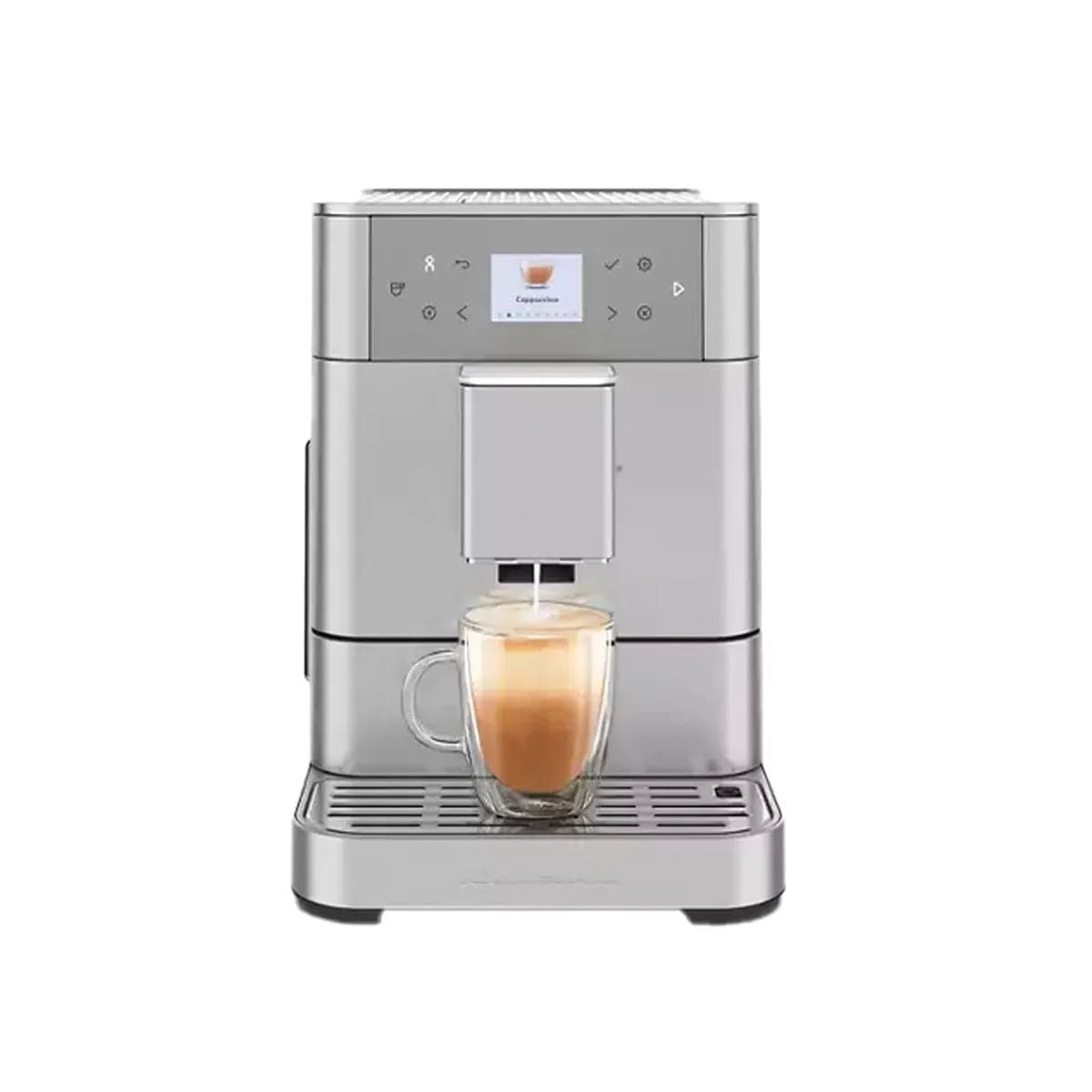
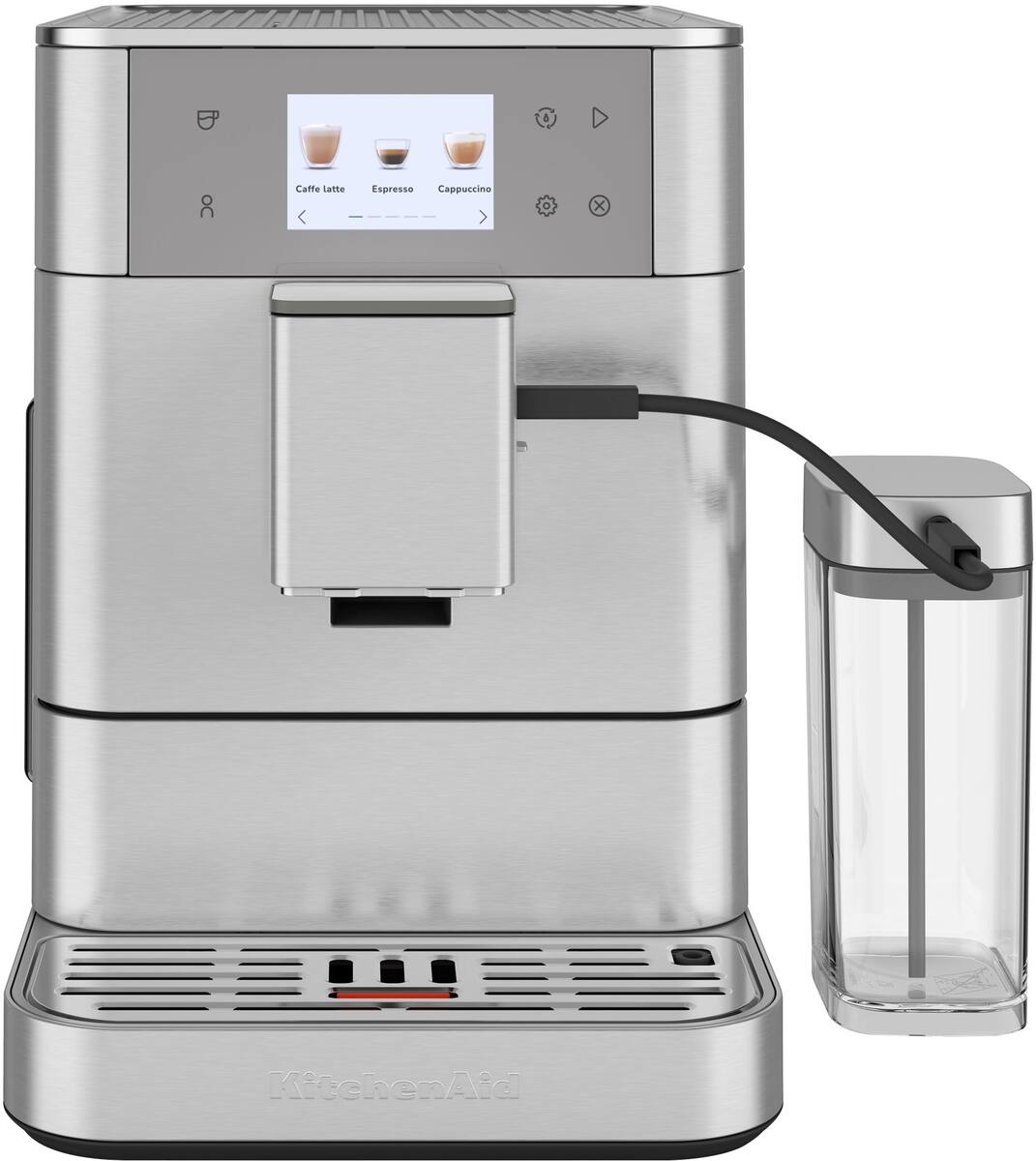
Quick take: The KitchenAid KF6 costs $500 less.
| Spec | KitchenAid KF6 | KitchenAid KF7 |
|---|---|---|
| Standout features | Quiet Mark Certified | Touchscreen, Metal-Clad Construction |
| Approx. price | ~$1,200 | ~$1,700 |
| Type | Super-Automatic | Super-Automatic |
| Boiler | Thermoblock | Thermoblock |
| Built-in grinder | Yes | Yes |
| Pump pressure | 15 bar | 15 bar |
| Water capacity | 74 oz | 74 oz |
| Warm-up time | Under 1 minute | Under 1 minute |
| Steam wand | Auto (Milk Hose) | Auto (Milk Hose) |
| Basket type | — | — |
| Best for | Espresso Purists | Bean Swappers |
| Dimensions | 10.2 x 18.5 x 14.3 in | 10.2 x 18.5 x 14.3 in |
| Weight | 28 lbs | 28 lbs |
| Warranty | 2 years | 2 years |
Pros & cons
KitchenAid KF6
- ✓15g max dose pulls fuller-bodied shots than most super-automatics manage
- ✓Removable 9.5-oz bean hoppers purge residual grounds so roasts never cross-contaminate
- ✓Quiet Mark certified - the pump is barely louder than a refrigerator
- ✓Four user profiles and metal-clad construction at $600 less than the KF8
- ✗Milk foam lacks density - the cappuccino sequence pours milk before espresso
- ✗Roughly 15 recipes and no iced drink options, unlike the newer KF2/KF4
- ✗Small 2.4-inch display with touch buttons feels dated next to touchscreen rivals
- ✗Milk hose connects to any container, but KitchenAid's milk carafe costs extra
KitchenAid KF7
- ✓Twist-off bean hopper lets you switch between decaf and regular without grinding through the leftovers
- ✓Touchscreen recipe picker is a genuine upgrade over the KF6's button interface
- ✓Milk hose works with any container you already own instead of a proprietary carafe
- ✓Metal-clad body feels substantially more solid than plastic rivals at this price
- ✓Smart dosing handles grind volume automatically, so dialing in is far less fiddly
- ✗$500 more than the KF6 for what is mostly a screen and cladding upgrade
- ✗4.1-star average reflects the same first-generation QC complaints that dog the KF8
- ✗Milk hose must be purged and cleaned after every session or it clogs
- ✗No plant-based milk modes - the KF8 above it is the one that textures oat and almond properly
- ✗Thermoblock heating means it cannot pull a shot and steam simultaneously
What owners say
KitchenAid KF6
The KF6 is the entry point to KitchenAid's super-automatic line, and the single most useful fact about it is that all three machines in that range share the same core hardware. Owners who have researched all of them say it plainly: the basic shot from a KF6 is identical to the shot from the KF8 costing hundreds more, because the brewing hardware does not change. What changes is the interface, the milk arrangement and the number of drink programs. That makes this the value pick of a well-regarded family — it lists at $1,200 but the Whirlpool Insider Pass and seasonal codes routinely bring it near $950 to $1,000, and at that price it is a lot of machine. Full owner insights →
KitchenAid KF7
The KF7 is the value sweet spot of KitchenAid's super-automatic line, and among owners it is the model most often recommended over its bigger sibling. It lists at $1,700, but almost nobody pays that — the Whirlpool Insider Pass and seasonal codes have repeatedly put it near $899 to $999, and that pricing is the single biggest reason it shows up in so many buying threads. What you give up against the KF8 is narrow and specific: a smaller screen, a few fewer drink programs, and no dedicated plant-milk frothing mode. Owners who use oat and almond milk anyway report it handles them without trouble, which is why the recurring verdict is that the KF7 makes the same coffee for meaningfully less money. It is a real step up in build and flavour from the mid-range — people arriving from a Philips 4300 or a Jura ENA 8 describe it as smoking both — and unusually for the category, most owners report good drinks immediately rather than after a long break-in. Full owner insights →
KitchenAid KF6 vs KitchenAid KF7: common questions
Which is cheaper, the KitchenAid KF6 or the KitchenAid KF7?
The KitchenAid KF6 is the cheaper of the two at roughly $1,200, about $500 less than the KitchenAid KF7 at ~$1,700. Both figures are approximate list prices and street prices move with sales.