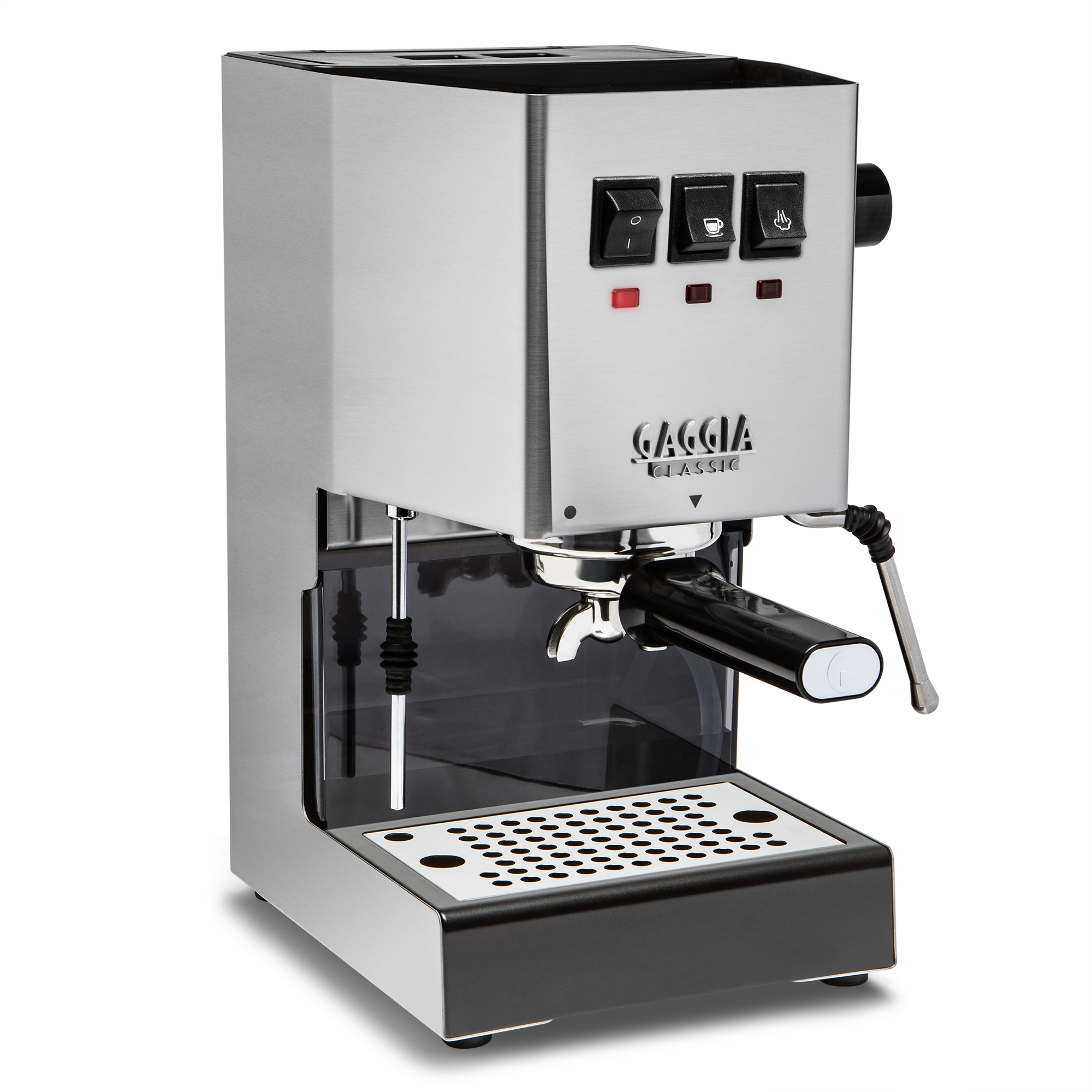
Gaggia Classic Pro vs Gaggia Classic Evo Pro
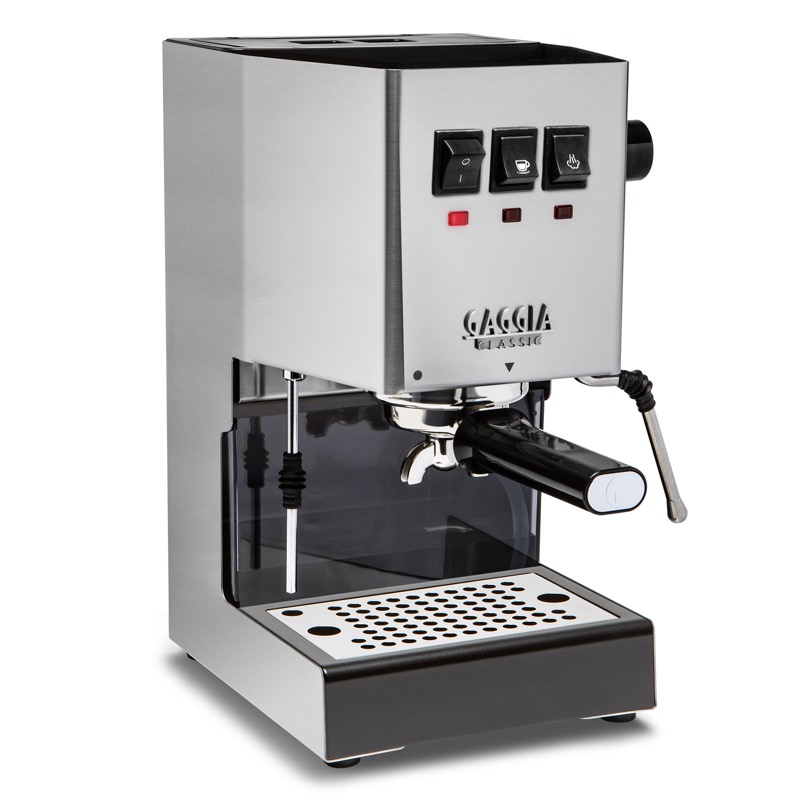
Quick take: The Gaggia Classic Pro costs $50 less; the Gaggia Classic Evo Pro heats up faster (3 minutes).
| Spec | Gaggia Classic Pro | Gaggia Classic Evo Pro |
|---|---|---|
| Standout features | Commercial Steam Wand, Solenoid Valve, 3-Way Valve | Steam Wand, 9-Bar Factory OPV, 3-Way Solenoid Valve |
| Approx. price | ~$450 | ~$500 |
| Type | Semi-Automatic | Semi-Automatic |
| Boiler | Single Boiler | Single Boiler |
| Built-in grinder | No | No |
| Pump pressure | 15 bar | 9 bar |
| Water capacity | 72 oz | 72 oz |
| Warm-up time | 10 minutes | 3 minutes |
| Steam wand | Commercial Manual | Manual |
| Basket type | Pressurized & Unpressurized | Pressurized & Unpressurized |
| Best for | Enthusiasts | Enthusiasts |
| Dimensions | 9.5 x 8 x 14.2 in | 8 x 9.5 x 14.2 in |
| Weight | 18 lbs | 20 lbs |
| Warranty | 1 year | 1 year |
Pros & cons
Gaggia Classic Pro
- ✓Commercial group head size
- ✓Excellent steam wand
- ✓Huge modding community
- ✓Great upgrade path
- ✗No PID (easy to add)
- ✗Single boiler workflow
- ✗Basic appearance
- ✗Steep learning curve
Gaggia Classic Evo Pro
- ✓Best entry-level prosumer machine
- ✓Endless mod community
- ✓Solid commercial-style portafilter
- ✓Legendary durability
- ✓9-bar pressure tuned from factory
- ✗Single boiler means waiting between brew and steam
- ✗No PID stock
- ✗Small drip tray
- ✗Manual workflow not for beginners
What owners say
Gaggia Classic Pro
For most of the last decade the Gaggia Classic Pro was the default answer to "what should my first real espresso machine be" - but the RI9380/46 is no longer the machine you buy new. Gaggia's own Classic Pro product page now serves the Classic Pro E24 and calls that the newest version, and the 2023 Classic Evo Pro that sat between the two has been folded into the same successor. What earned this platform a decade of devotion was never its feature list: a stainless shell you can stand on, a commercial 58mm group and portafilter that shares baskets, screens and tampers with machines costing five times as much, a three-way solenoid that leaves a dry puck, and internals simple enough that every wearing part is a cheap order and a screwdriver away. Full owner insights →
Gaggia Classic Evo Pro
The Classic Evo Pro is no longer made, and the machine that replaced it — the Classic Pro E24 — exists in large part because of what went wrong here. The Evo Pro was the 2023 revision of Gaggia's long-running Classic, and it introduced a coated aluminium boiler that became genuinely notorious. The problem, referred to in owner discussions by a nickname of its own, is the boiler lining degrading and finding its way into shots. It generated refunds and returns, and it is now the first thing experienced owners tell anyone buying a used Evo Pro to check. If you are looking at one on the secondhand market, that check is not optional — it is the single most important thing to establish before money changes hands. Full owner insights →
Gaggia Classic Pro vs Gaggia Classic Evo Pro: common questions
Which is cheaper, the Gaggia Classic Pro or the Gaggia Classic Evo Pro?
The Gaggia Classic Pro is the cheaper of the two at roughly $450, about $50 less than the Gaggia Classic Evo Pro at ~$500. Both figures are approximate list prices and street prices move with sales.
Which heats up faster, the Gaggia Classic Pro or the Gaggia Classic Evo Pro?
The Gaggia Classic Evo Pro is ready sooner — 3 minutes against 10 minutes for the Gaggia Classic Pro. That gap matters most on weekday mornings; if you pull shots at a relaxed pace it makes little practical difference.