Gaggia Classic GT vs Gaggia Accademia
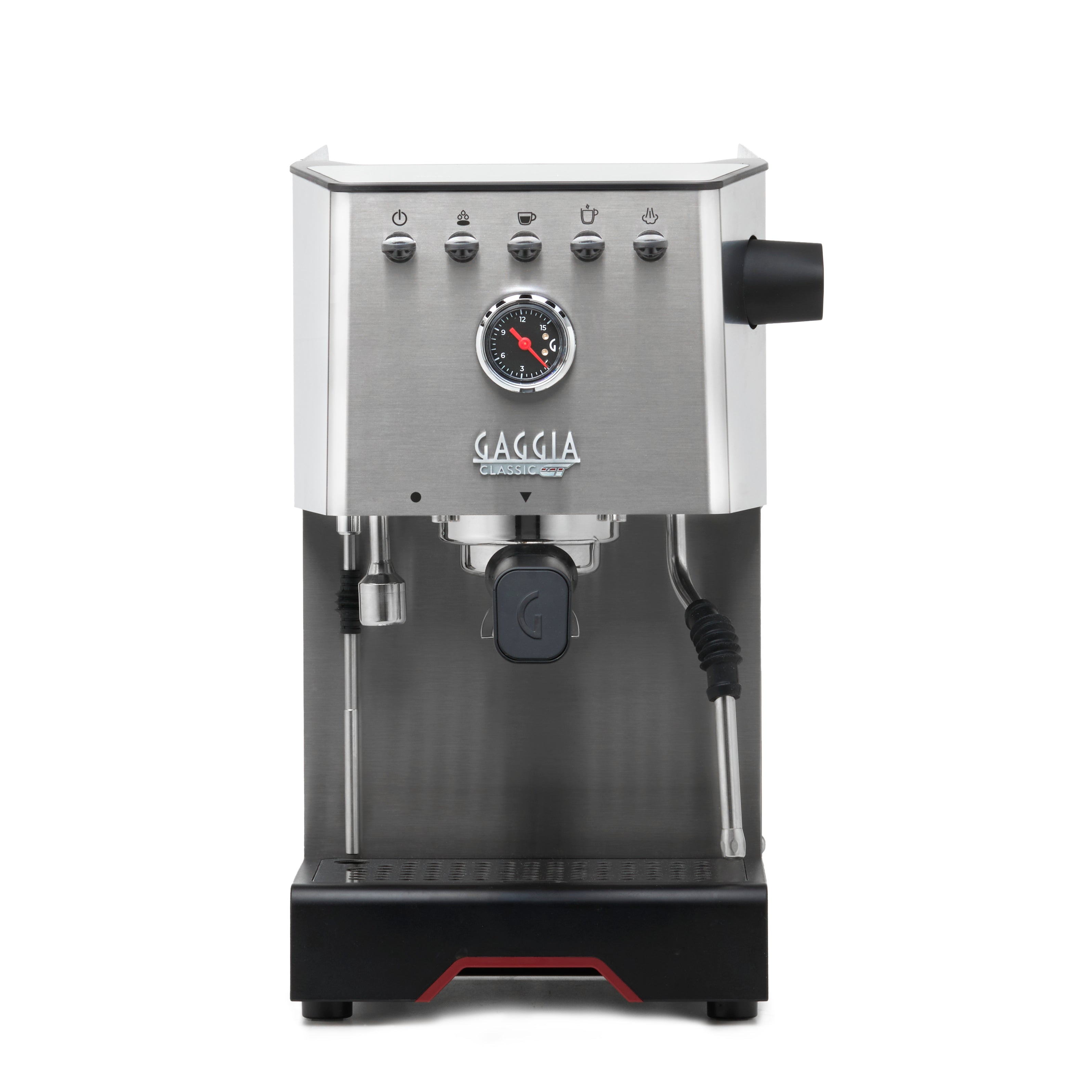
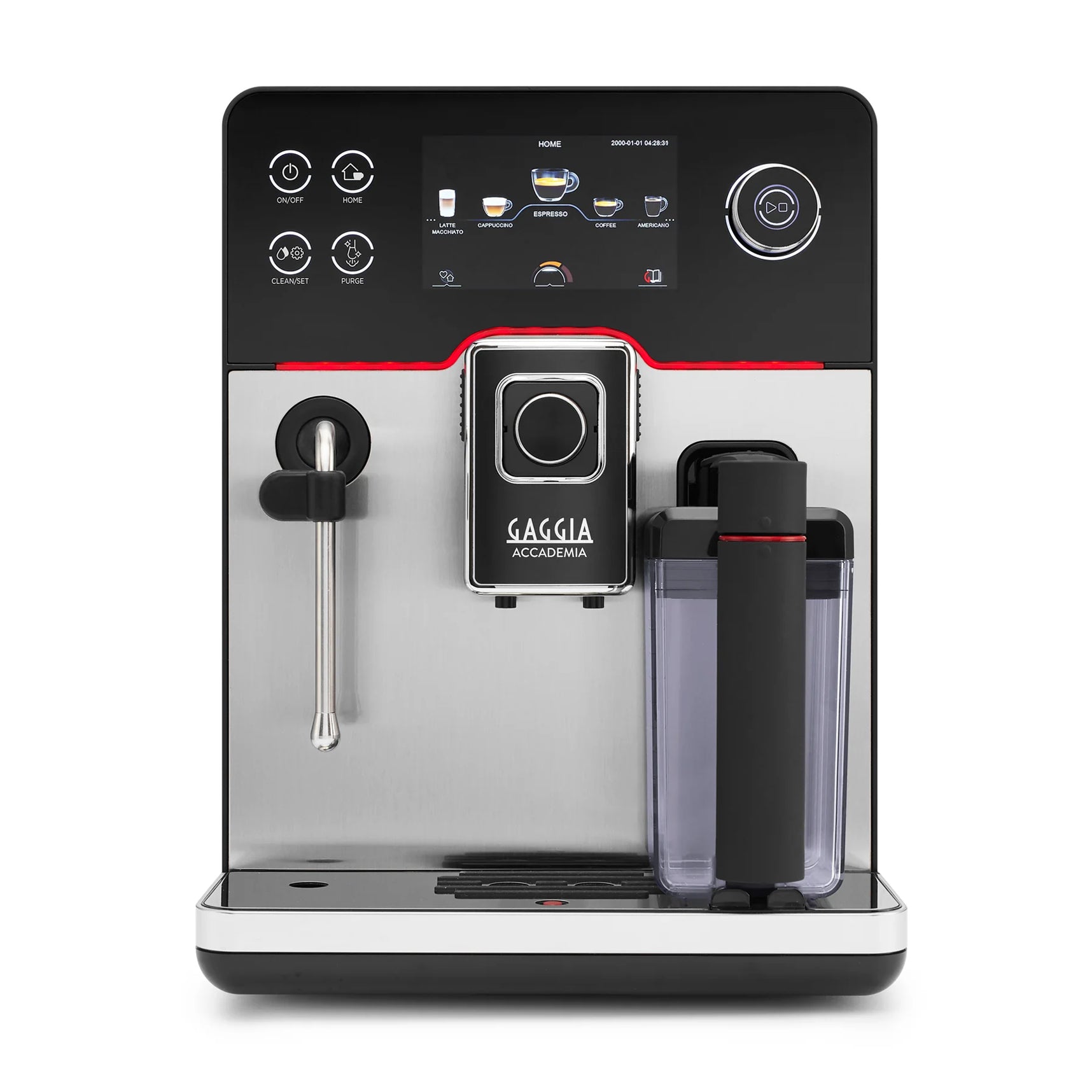
Quick take: The Gaggia Classic GT costs $301 less; the Gaggia Accademia has a built-in grinder; the Gaggia Accademia heats up faster (1 minute).
| Spec | Gaggia Classic GT | Gaggia Accademia |
|---|---|---|
| Standout features | Dual Boiler, Dual PID Control, Low-Flow Pre-Infusion, Volumetric Shot Programming, Adjustable External OPV, 58mm Portafilter | Built-in Grinder, One-Touch Milk Carafe, Glass Touchscreen, 19 Drink Presets, Adjustable Pre-Infusion |
| Approx. price | ~$1,699 | ~$2,000 |
| Type | Semi-Automatic | Super-Automatic |
| Boiler | Dual Boiler | Thermoblock |
| Built-in grinder | No | Yes |
| Pump pressure | 9 bar | 15 bar |
| Water capacity | 68 oz | 54 oz |
| Warm-up time | 5 minutes | 1 minute |
| Steam wand | Commercial Manual | Auto (Carafe) + Manual Wand |
| Basket type | Unpressurized | — |
| Best for | Enthusiasts | Milk Drinks |
| Dimensions | 10.4 x 16.1 x 16.6 in | 11.1 x 16.9 x 15.2 in |
| Weight | 38.9 lbs | 30.4 lbs |
| Warranty | 1 year | 2 years |
Pros & cons
Gaggia Classic GT
- ✓Brew and steam simultaneously with 1-degree brew temperature adjustment
- ✓Automated 3g/second low-flow pre-infusion with bloom step is rare under $2,000
- ✓Volumetric programming plus three shot presets for repeatable workflow
- ✓Heats to brew-ready in about 5 minutes - fast for a dual boiler
- ✗Big price jump from the $549 Classic Pro E24
- ✗Nearly 39 lbs and a 16-inch-deep footprint
- ✗Brand new platform with little long-term reliability data
- ✗No flow control paddle at a price where Lelit Bianca competes
Gaggia Accademia
- ✓Only machine in its class with both a milk carafe and a real steam wand
- ✓Adjustable strength, temperature, dose, pre-infusion, and flow per drink
- ✓19 presets cover everything from ristretto to cortado to hot milk
- ✓Undercuts Jura's similarly equipped flagships by hundreds of dollars
- ✗Big and heavy - over 11 inches wide and 30 pounds
- ✗1.6L tank is small relative to its drink output
- ✗Interface feels dated next to newer app-connected rivals
- ✗Frequent rinse cycles from the dual milk plumbing
What owners say
Gaggia Accademia
The Accademia is Gaggia's flagship bean-to-cup and it solves a problem most super-automatics ignore: it gives you both a one-touch milk carafe and a genuine commercial steam wand on the same machine. That combination turns out to matter in real households. The pattern owners describe is that one person uses the automatic carafe every day for convenience while the other reaches for the wand when they want a properly textured cappuccino — and the wand means you are never limited by what the automatic system can do. The carafe also self-cleans its internals when you close it, which is the feature buyers hunting for a low-maintenance machine keep circling back to. Add a glass touchscreen, nineteen drink presets, more grinder adjustment than Gaggia's cheaper machines, adjustable pre-infusion and a flow control that lets you slow the shot down, and at $1,599 it is a genuinely well-specified machine that stands about 15 inches tall, low enough to clear most wall cabinets. Full owner insights →
Gaggia Classic GT vs Gaggia Accademia: common questions
Which is cheaper, the Gaggia Classic GT or the Gaggia Accademia?
The Gaggia Classic GT is the cheaper of the two at roughly $1,699, about $301 less than the Gaggia Accademia at ~$2,000. Both figures are approximate list prices and street prices move with sales.
Is the Gaggia Classic GT or the Gaggia Accademia easier to use day to day?
They are different classes of machine: the Gaggia Classic GT is a semi-automatic you dose, tamp and time yourself, while the Gaggia Accademia is a super-automatic that grinds, doses and brews at the touch of a button. That difference matters more than any single spec on this page — it decides how much of the shot you control and how much the machine handles for you.
Which is better for lattes and cappuccinos, the Gaggia Classic GT or the Gaggia Accademia?
The Gaggia Classic GT uses a manual steam wand you texture milk with yourself, while the Gaggia Accademia offers both an automatic milk system and a manual wand. An automatic system gets you a consistent milk drink with no practice; a manual wand takes a few weeks to learn but gives you proper microfoam and latte art once it clicks.
Does the Gaggia Classic GT or the Gaggia Accademia have a built-in grinder?
Only the Gaggia Accademia grinds its own beans. The Gaggia Classic GT needs a separate grinder, which is worth budgeting for — a dedicated burr grinder is usually the bigger upgrade to shot quality, but it also costs extra counter space and money on top of the machine.
Which heats up faster, the Gaggia Classic GT or the Gaggia Accademia?
The Gaggia Accademia is ready sooner — 1 minute against 5 minutes for the Gaggia Classic GT. That gap matters most on weekday mornings; if you pull shots at a relaxed pace it makes little practical difference.
What is the difference in boiler design between the Gaggia Classic GT and the Gaggia Accademia?
The Gaggia Classic GT uses a dual boiler and the Gaggia Accademia uses a thermoblock. Boiler design drives temperature stability and whether you can brew and steam at the same time, which is the main reason two otherwise similar machines behave differently once you start making milk drinks back to back.