De'Longhi Stilosa vs De'Longhi Dedica EC680M
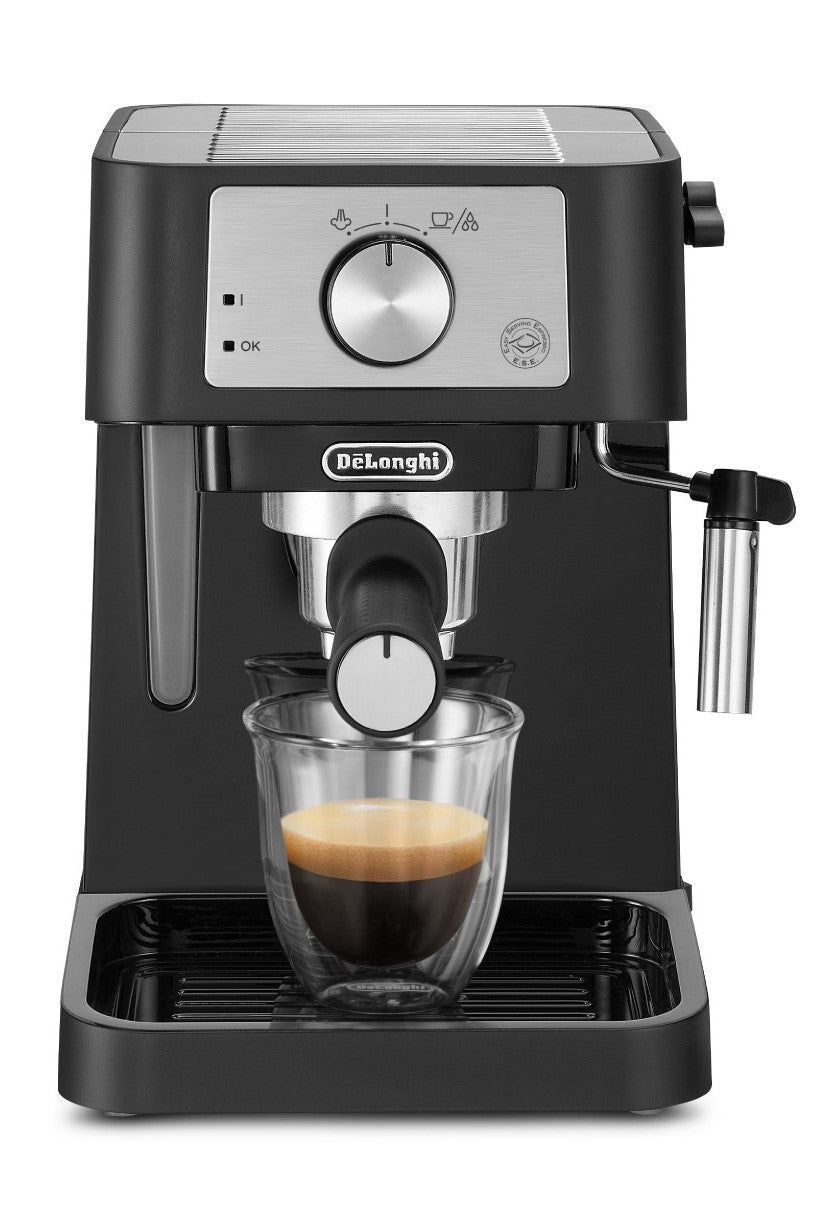
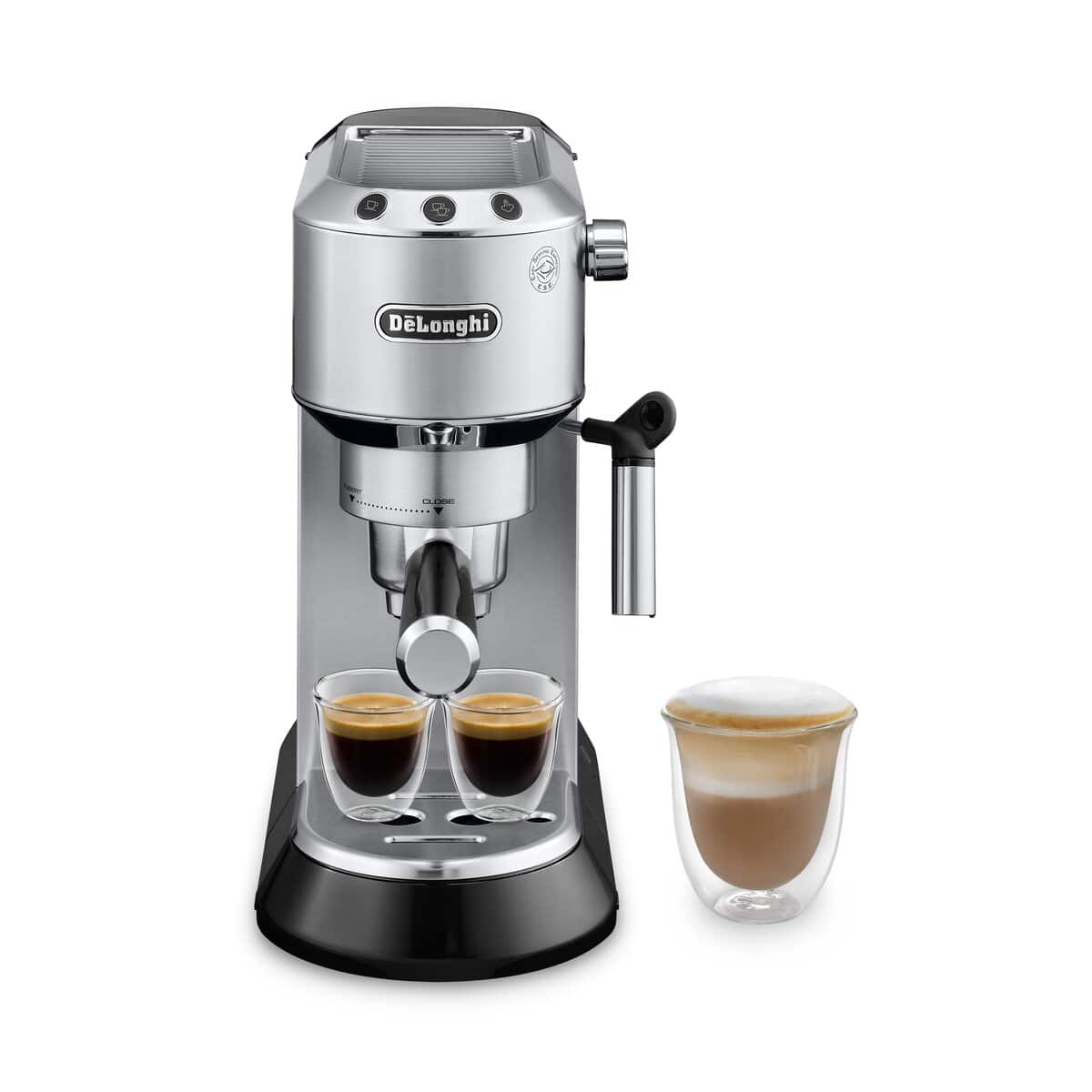
Quick take: The De'Longhi Stilosa costs $50 less.
| Spec | De'Longhi Stilosa | De'Longhi Dedica EC680M |
|---|---|---|
| Standout features | Steam Wand, Compact Design, Pressurized Basket | 6-Inch Slim Design, Manual Milk Frother, Programmable Doses, ESE Pod Compatible, Auto Shut-Off |
| Approx. price | ~$100 | ~$150 |
| Type | Semi-Automatic | Semi-Automatic |
| Boiler | Single Boiler | Thermoblock |
| Built-in grinder | No | No |
| Pump pressure | 15 bar | 15 bar |
| Water capacity | 34 oz | 35 oz |
| Warm-up time | 40 seconds | 40 seconds |
| Steam wand | Manual | Manual (Panarello) |
| Basket type | Pressurized Only | Pressurized 51mm |
| Best for | Beginners | Beginners |
| Dimensions | 8.1 x 13.5 x 11.2 in | 5.9 x 13.0 x 12.0 in |
| Weight | 8.6 lbs | 9.6 lbs |
| Warranty | 1 year | 1 year |
Pros & cons
De'Longhi Stilosa
- ✓Cheapest path to real pump-driven espresso
- ✓Proper manual steam wand instead of a panarello at this price
- ✓Compact and lightweight - easy to tuck away
- ✓Simple mechanics with a big modding community
- ✗Pressurized baskets only - fake crema until you buy aftermarket baskets
- ✗Lots of plastic; feels every bit of its $110 price
- ✗No PID or temperature control, so shots run hot and cold
- ✗Odd 51mm size limits tamper and accessory upgrades
De'Longhi Dedica EC680M
- ✓Slimmest footprint of any pump machine - fits where nothing else will
- ✓Thermoblock is ready to brew about 40 seconds after power-on
- ✓Programmable one and two-shot volumes plus ESE pod support
- ✓Stainless steel body looks far more expensive than it is
- ✗Cup clearance is tight and taller mugs need the drip tray removed
- ✗Panarello wand makes bubbly foam, not true latte-art microfoam
- ✗Pressurized 51mm baskets limit upgrades for serious espresso tinkering
- ✗Known to drop water temperature on back-to-back shots without flushing
What owners say
De'Longhi Stilosa
The De'Longhi Stilosa is the cheapest machine the community will recommend with a straight face, and with De'Longhi's older EC155M now discontinued and pointing here, it is the live entry point to the brand's manual line. For about $150 — and routinely $60 to $75 on sale, on the used market, or in a thrift shop — you get a 51mm portafilter, a small single boiler, a 15-bar vibration pump and a real manual steam wand behind a panarello sleeve. Out of the box it ships with a pressurized double-walled basket, which fakes crema and forgives bad coffee, so what the machine really is is a platform: nearly every part owners complain about is cheap to replace. Full owner insights →
De'Longhi Stilosa vs De'Longhi Dedica EC680M: common questions
Which is cheaper, the De'Longhi Stilosa or the De'Longhi Dedica EC680M?
The De'Longhi Stilosa is the cheaper of the two at roughly $100, about $50 less than the De'Longhi Dedica EC680M at ~$150. Both figures are approximate list prices and street prices move with sales.
What is the difference in boiler design between the De'Longhi Stilosa and the De'Longhi Dedica EC680M?
The De'Longhi Stilosa uses a single boiler and the De'Longhi Dedica EC680M uses a thermoblock. Boiler design drives temperature stability and whether you can brew and steam at the same time, which is the main reason two otherwise similar machines behave differently once you start making milk drinks back to back.