De'Longhi Dedica Arte vs Gaggia Classic Evo Pro
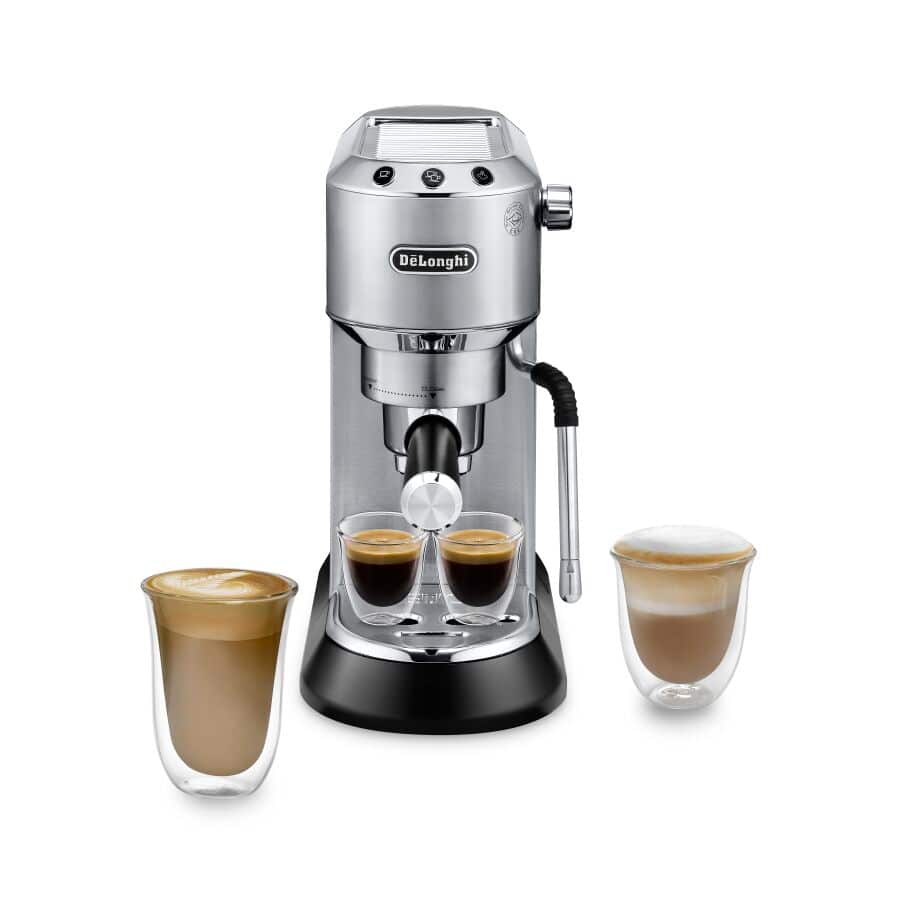
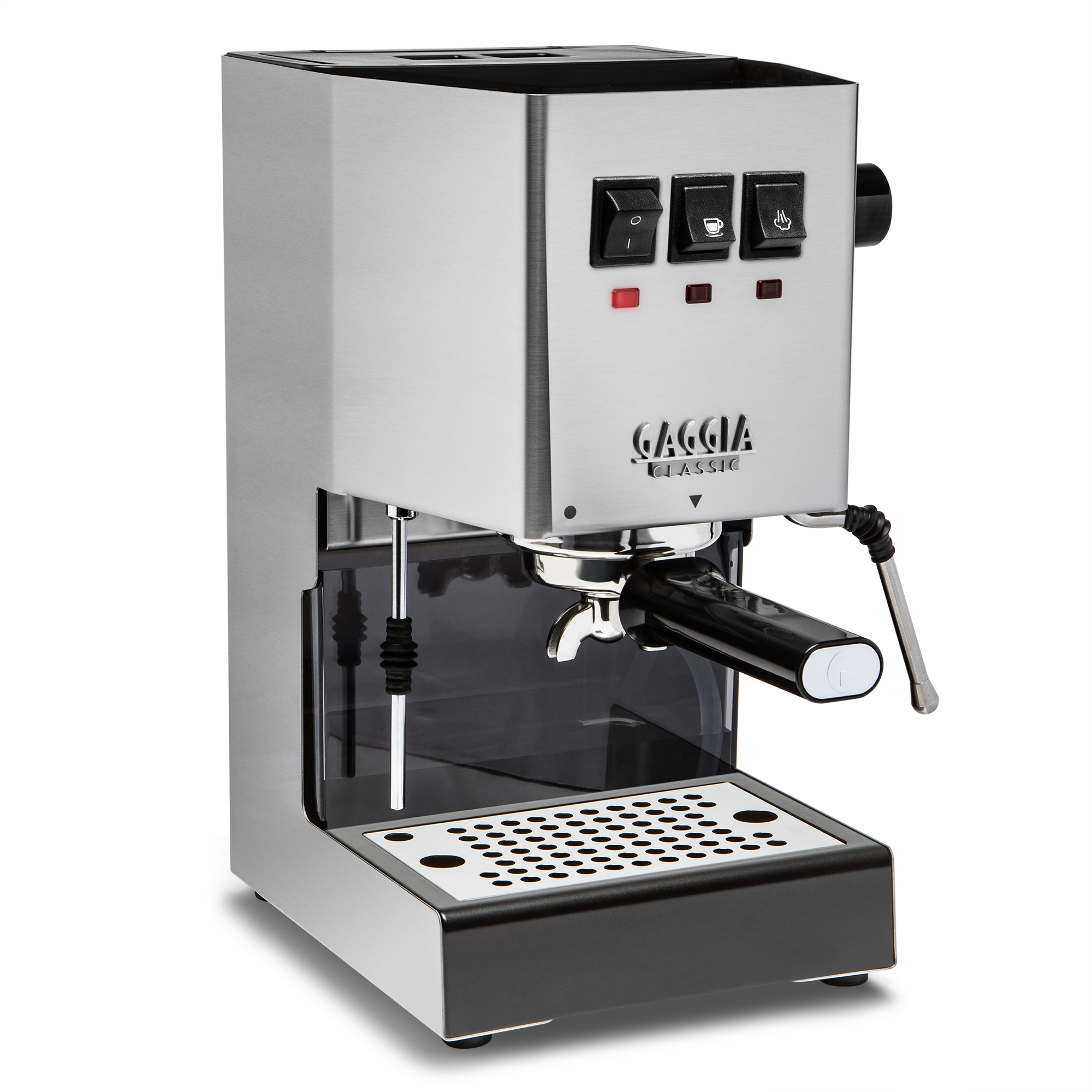
Quick take: The De'Longhi Dedica Arte costs $200 less; the De'Longhi Dedica Arte heats up faster (40 seconds).
| Spec | De'Longhi Dedica Arte | Gaggia Classic Evo Pro |
|---|---|---|
| Standout features | My LatteArt Steam Wand, 3-Level Temp Control, Compact Design, Pressurized Basket, Quick Heat Up | 9-Bar Factory OPV, 58mm Portafilter, 3-Way Solenoid Valve |
| Approx. price | ~$300 | ~$500 |
| Type | Semi-Automatic | Semi-Automatic |
| Boiler | Thermoblock | Single Boiler |
| Built-in grinder | No | No |
| Pump pressure | 15 bar | 9 bar |
| Water capacity | 35 oz | 72 oz |
| Warm-up time | 40 seconds | 3 minutes |
| Steam wand | Manual (My LatteArt) | Manual |
| Basket type | Pressurized Only | Pressurized & Unpressurized |
| Best for | Beginners | Enthusiasts |
| Dimensions | 5.9 x 13.3 x 12 in | 8 x 9.5 x 14.2 in |
| Weight | 9 lbs | 20 lbs |
| Warranty | 1 year | 1 year |
Pros & cons
De'Longhi Dedica Arte
- ✓Incredibly slim profile
- ✓Fast heat-up
- ✓Commercial-style 2-hole My LatteArt steam wand
- ✓Affordable
- ✗Pressurized baskets only
- ✗Small water tank
- ✗Not for advanced users
- ✗Thermoblock
Gaggia Classic Evo Pro
- ✓Best entry-level prosumer machine
- ✓Endless mod community
- ✓Solid commercial-style portafilter
- ✓Legendary durability
- ✓9-bar pressure tuned from factory
- ✗Single boiler means waiting between brew and steam
- ✗No PID stock
- ✗Small drip tray
- ✗Manual workflow not for beginners
What owners say
De'Longhi Dedica Arte
The Dedica Arte is the slim-line De'Longhi aimed at people who want to make espresso properly without a large machine or a large outlay. At $300 it gives you a compact body that fits counters nothing else will, three-level temperature control, quick heat-up, a steam wand intended for latte art, and programmable volume buttons — that last feature being the one owners get the most out of and the one most people never discover. The buttons learn: prepare your basket, hold a button for exactly the extraction length you want, and it will remember that duration. Doing that usefully means owning a scale and a timer, so you know how many grams went in, how many seconds it ran and therefore what to change next time. That combination turns a modest machine into a repeatable one. Full owner insights →
Gaggia Classic Evo Pro
The Classic Evo Pro is no longer made, and the machine that replaced it — the Classic Pro E24 — exists in large part because of what went wrong here. The Evo Pro was the 2023 revision of Gaggia's long-running Classic, and it introduced a coated aluminium boiler that became genuinely notorious. The problem, referred to in owner discussions by a nickname of its own, is the boiler lining degrading and finding its way into shots. It generated refunds and returns, and it is now the first thing experienced owners tell anyone buying a used Evo Pro to check. If you are looking at one on the secondhand market, that check is not optional — it is the single most important thing to establish before money changes hands. Full owner insights →
De'Longhi Dedica Arte vs Gaggia Classic Evo Pro: common questions
Which is cheaper, the De'Longhi Dedica Arte or the Gaggia Classic Evo Pro?
The De'Longhi Dedica Arte is the cheaper of the two at roughly $300, about $200 less than the Gaggia Classic Evo Pro at ~$500. Both figures are approximate list prices and street prices move with sales.
Which heats up faster, the De'Longhi Dedica Arte or the Gaggia Classic Evo Pro?
The De'Longhi Dedica Arte is ready sooner — 40 seconds against 3 minutes for the Gaggia Classic Evo Pro. That gap matters most on weekday mornings; if you pull shots at a relaxed pace it makes little practical difference.
What is the difference in boiler design between the De'Longhi Dedica Arte and the Gaggia Classic Evo Pro?
The De'Longhi Dedica Arte uses a thermoblock and the Gaggia Classic Evo Pro uses a single boiler. Boiler design drives temperature stability and whether you can brew and steam at the same time, which is the main reason two otherwise similar machines behave differently once you start making milk drinks back to back.