Breville Barista Express vs Breville Barista Touch
Quick take: The Breville Barista Express costs $300 less; the Breville Barista Touch heats up faster (3 seconds).
| Spec | Breville Barista Express | Breville Barista Touch |
|---|---|---|
| Standout features | Steam Wand, Pressure Gauge | Touchscreen, Auto Milk Texturing, Programmable |
| Approx. price | ~$700 | ~$1,000 |
| Type | Semi-Automatic | Semi-Automatic |
| Boiler | Thermoblock | Thermoblock |
| Built-in grinder | Yes | Yes |
| Pump pressure | 15 bar | 15 bar |
| Water capacity | 67 oz | 67 oz |
| Warm-up time | 30 seconds | 3 seconds |
| Steam wand | Manual | Auto |
| Basket type | Pressurized & Unpressurized | Pressurized & Unpressurized |
| Best for | Enthusiasts | Milk Drinks |
| Dimensions | 12.5 x 13.8 x 15.9 in | 12.5 x 13.2 x 15.8 in |
| Weight | 23 lbs | 23 lbs |
| Warranty | 1 year | 2 years |
Pros & cons
Breville Barista Express
- ✓The default first-machine recommendation in the community for a decade
- ✓Integrated dose-control grinder saves counter space and money
- ✓Analog pressure gauge gives instant feedback while dialing in
- ✓PID-controlled thermocoil holds brew temperature well for the price
- ✗Built-in grinder struggles with light roasts and retains grounds
- ✗Grind steps are coarse - inner burr adjustment is a hassle
- ✗Must wait between brewing and steaming on the single thermocoil
- ✗Only a 1-year warranty on a $700 machine
Breville Barista Touch
- ✓Touchscreen guides grind, brew, and milk for every drink
- ✓ThermoJet is ready in 3 seconds - no waiting to brew
- ✓Auto milk texturing with adjustable temp and foam levels
- ✓Hundreds less than the Touch Impress with the same core workflow
- ✗No assisted tamping - you still dose and tamp by hand
- ✗Thermoblock can't brew and steam simultaneously
- ✗Grinder struggles with very light roasts
- ✗Superseded by the Touch Impress, so fewer retail discounts
What owners say
Breville Barista Express
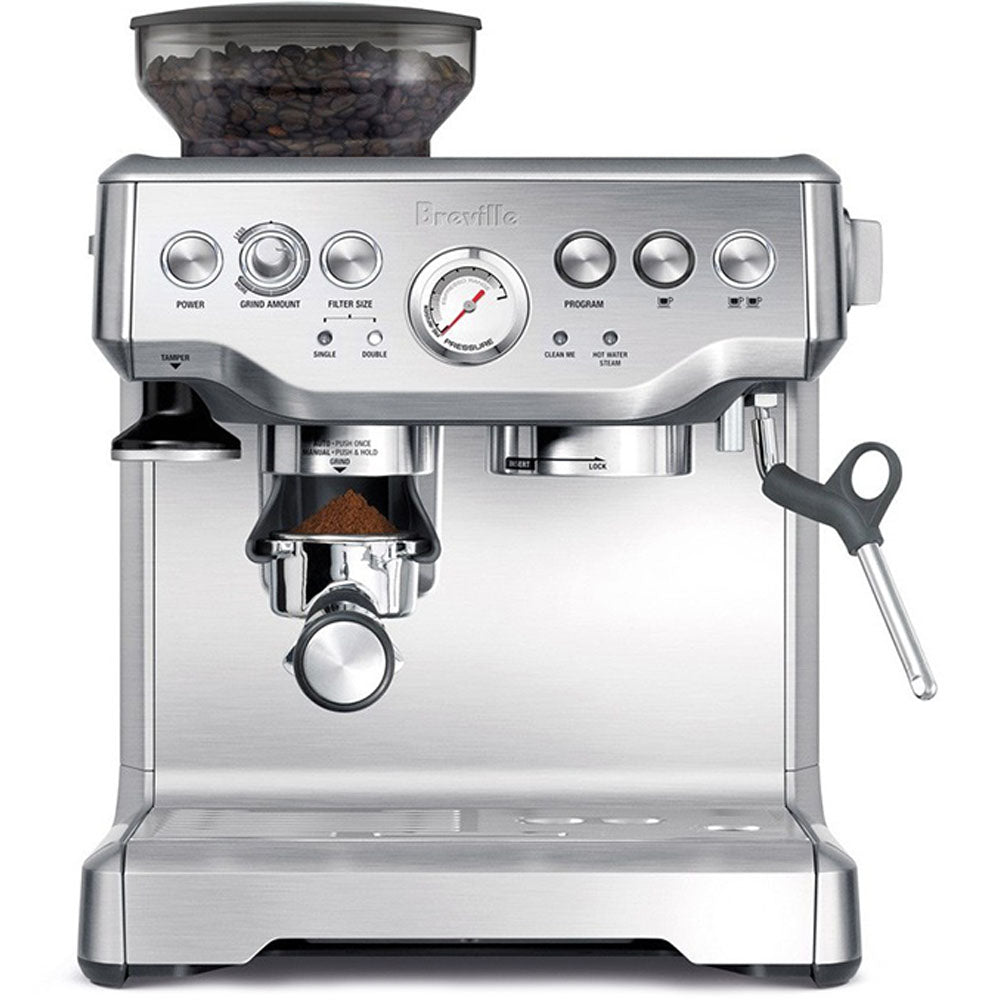
The Barista Express is the machine that taught a whole generation of people to pull espresso. It is a thermocoil single-boiler with a conical burr grinder bolted to the left side, a 54mm portafilter, a dose-control grind cradle, the little razor tool for trimming the puck, and an analog pressure gauge on the front. It has been on sale for well over a decade with barely a change, it is still the most-discussed all-in-one in home espresso, and it remains the default answer when someone wants one appliance on one square of counter that grinds, brews and steams for $700. Full owner insights →
Breville Barista Touch
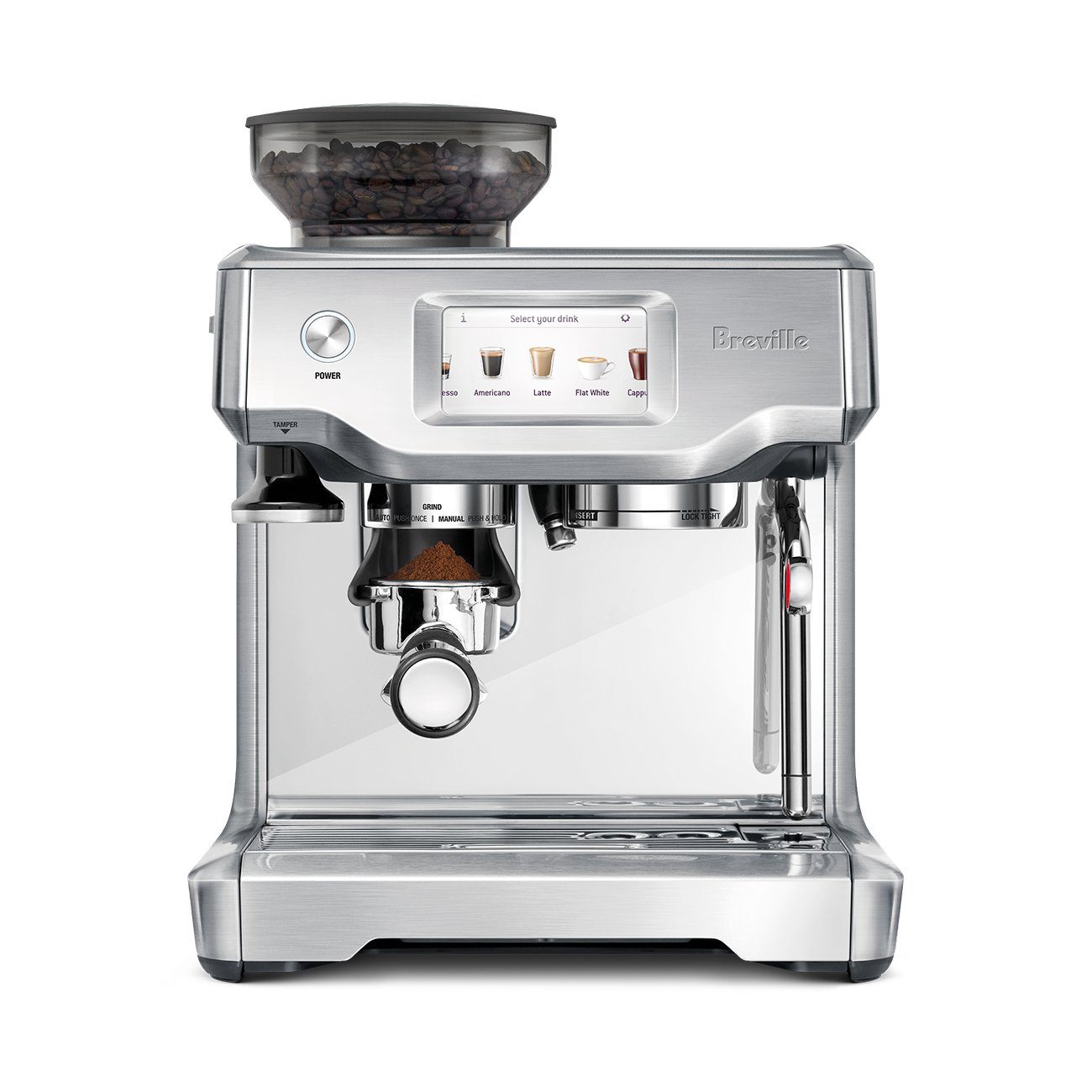
The Barista Touch (BES880) is Breville's all-in-one answer to "I just want a good latte without owning four appliances": a conical burr grinder, a ThermoJet heater that goes from stone cold to shot-ready in about three seconds, an automatic steam wand that textures milk to a set temperature, and a colour touchscreen that stores drink profiles and walks a first-timer through the whole sequence. Current units run Baratza-derived burrs, and owners who have used both generations are clear that the newer grinder is a real step up over the early ones — a distinction that gets lost in the older "the built-in grinder is junk" advice still floating around. Full owner insights →
Breville Barista Express vs Breville Barista Touch: common questions
Which is cheaper, the Breville Barista Express or the Breville Barista Touch?
The Breville Barista Express is the cheaper of the two at roughly $700, about $300 less than the Breville Barista Touch at ~$1,000. Both figures are approximate list prices and street prices move with sales.
Which is better for lattes and cappuccinos, the Breville Barista Express or the Breville Barista Touch?
The Breville Barista Express uses a manual steam wand you texture milk with yourself, while the Breville Barista Touch steams and textures milk automatically. An automatic system gets you a consistent milk drink with no practice; a manual wand takes a few weeks to learn but gives you proper microfoam and latte art once it clicks.
Which heats up faster, the Breville Barista Express or the Breville Barista Touch?
The Breville Barista Touch is ready sooner — 3 seconds against 30 seconds for the Breville Barista Express. That gap matters most on weekday mornings; if you pull shots at a relaxed pace it makes little practical difference.